Light is not simply an element that allows us to see. It is an architectural force. It shapes emotions, guides movement, defines space, sculpts comfort, and determines how we experience home. Homes with the same layout can feel completely different depending on how well they manage light. More importantly, the effectiveness of light inside a home depends on something most homeowners hardly consider: the glass controlling it.
Modern residential design recognizes four essential types of light that contribute to a balanced, healthy, and emotionally stable home interior. Most houses unintentionally rely on one or two. Very few have all four. Yet lasting comfort depends on a complete spectrum.
Pacific Glass LTD has spent years studying how various glass technologies help homes achieve these distinct categories of light. This blog offers a complete, professional breakdown of the four types, the science behind each, and the glass specifications that enable them to work together.
1. Direct Light: The Power Source of a Living Home
Direct sunlight is intense, warm, and life-shaping. It creates drama in a room—bright spots, sharp shadows, and strong psychological energy. Homes designed with good direct light feel vibrant throughout the day.
However, the quality of direct light depends entirely on the glass that filters it.
Direct sunlight passing through outdated single-pane windows brings excess heat, UV exposure, glare, and adaptive temperature swings. Direct sunlight passing through modern engineered glass creates clarity, warmth, and brightness without discomfort.
The most effective glass options for managing direct light include:
- Low-E coated glass that blocks UV radiation
- Double-pane or triple-pane insulated units that reduce heat transfer
- Tinted glass for glare control
- Spectrally selective coatings that allow brightness but block heat
Direct light has emotional effects as well. Studies show that bright, controlled sunlight boosts alertness, increases serotonin levels, and supports productivity. It turns living rooms into energetic morning spaces and dining rooms into warm evening zones.
The problem is not direct sunlight—it is unmanaged direct sunlight.
Homes in Burnaby, Vancouver, and the Lower Mainland experience seasonal swings, which means the right glass must balance both winter warmth and summer glare. Pacific Glass LTD frequently replaces aging windows not because the light is wrong, but because the glass filtering it is outdated.
2. Diffused Light: The Most Comfortable Light a Home Can Have
Diffused light is soft, even, shadow-free illumination. It eliminates harsh brightness and creates a stable, calm interior environment. You see this type of light in high-end architecture, art studios, and homes designed with deep sensitivity to emotional comfort.
Diffused light smooths the psychological edges of a room. It makes spaces feel larger, more peaceful, and more emotionally accessible.
Glass solutions that enable diffused light include:
- Frosted or acid-etched glass
- Satin-finish laminated glass
- Diffusion-coated insulated units
- Textured privacy glass with light-softening patterns
This type of light is essential for bathrooms, hallways, reading nooks, home offices, and any space where comfort matters more than spectacle. It also prevents eye strain and reduces the visual fatigue that harsh brightness creates.
Homes missing diffused light often feel emotionally uneven: too bright in some zones, too dark in others, forcing homeowners to constantly adjust blinds or avoid certain areas entirely.
The right glass eliminates that imbalance.
3. Reflected Light: The Hidden Sculptor of Space
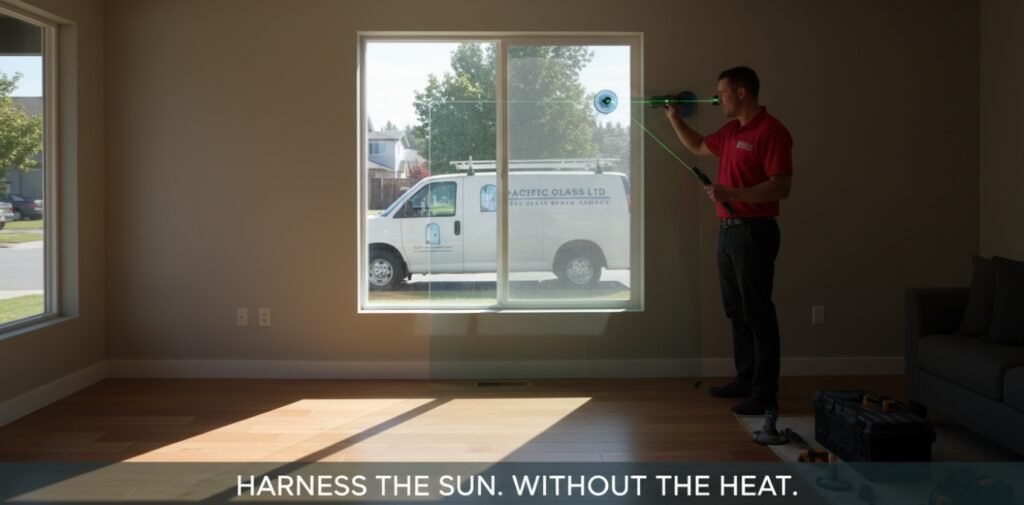
Reflected light is one of the least-discussed components of home comfort, yet one of the most transformative. It is created when sunlight bounces off surfaces—floors, countertops, glass partitions, and architectural elements.
Reflected light can:
- Make rooms appear significantly larger
- Brighten corners that direct light cannot reach
- Increase perceived ceiling height
- Reduce the need for artificial lighting
- Create visual depth and softness
The type of glass used dramatically changes how reflection behaves in a home.
Clear, low-iron glass enhances brightness by reflecting more natural light throughout the space. Glass partitions, interior window panels, or open stairway glazing create secondary pathways for light to travel through.
Homes designed with reflected light feel alive even when the sun is at low angles or moving across different sides of the home through the day.
Pacific Glass LTD often introduces interior glazing solutions for clients seeking more light without structural changes. One slim pane of strategically placed low-iron glass can accomplish the equivalent of installing a new window.
Reflected light is subtle, but it dramatically evolves how a home feels.
4. Ambient Light: The Foundation of Emotional Stability
Ambient natural light is the backup system that fills a home when direct or reflected sources are not available. It is the soft glow that remains when the sky is overcast, when the sun is on the other side of the house, or when diffused light takes the lead.
Ambient natural light sets the emotional baseline of a home.
Homes lacking stable ambient light feel dim and psychologically heavy. Homes with strong ambient light feel open, balanced, and emotionally calm.
Glass technologies that strengthen ambient light include:
- High-clarity low-iron glass
- Thin-tint options that maintain brightness
- Large-format glazing
- Minimalistic frame systems that increase visible area
- High-transmission insulated units
In Pacific Glass LTD’s installations, ambient light is one of the most common issues homeowners struggle with without realizing it. Rooms that seem “cold,” “lifeless,” or “uninviting” nearly always suffer from compromised ambient light caused by aging glass, fogged seals, or old tints that distort natural tone.
Modern glass restores the true color and quality of daylight, enabling a home’s natural design and architecture to breathe again.
How These Four Types of Light Work Together
A fully comfortable home must combine:
- The energy of direct light
- The softness of diffused light
- The depth of reflected light
- The stability of ambient light
Glass selection is the mechanism that allows them to interact smoothly.
Below is a simplified table showing the relationship:
| Type of Light | Purpose | Best Glass Options |
| Direct Light | Energy and vitality | Low-E, spectrally selective, tinted |
| Diffused Light | Comfort and calmness | Frosted, etched, privacy glass |
| Reflected Light | Spatial depth | Low-iron, interior glazing |
| Ambient Light | Emotional stability | High-transmission insulated glass |
This interaction is what creates a home that feels balanced morning to evening, winter to summer, sunny or overcast.
Why Glass Matters More Than Window Size
One of the biggest misconceptions homeowners have is that more windows equal more light. In reality, the quality of light depends on:
- Glass coating
- Glass thickness
- Pane count
- UV filtration
- Color tint
- Iron content
- Internal seal performance
- Frame design
Pacific Glass LTD regularly replaces large windows that deliver poor light quality with smaller, high-performance glazing that delivers significantly better comfort.
The science is simple: poor glass is a bottleneck. High-performance glass is an amplifier.
Why Homeowners in the Lower Mainland Need This Balance More Than Most Regions
Burnaby, Vancouver, and surrounding cities have extremely dynamic seasons. Light changes constantly, angles shift, cloud cover dominates winter, and bright summers create intense glare.
A home that can manage all four types of light will feel comfortable year-round, stable in temperature, and far more emotionally supportive.
Without controlled glass technologies, the home becomes a victim of climate instead of a partner to it.
How Pacific Glass LTD Designs for Light
Pacific Glass LTD approaches window installation and glass replacement as a full architectural experience, not simply a product swap. Every home has its own light signature. Our responsibility is to translate that into emotional comfort.
We look at:
- Light direction
- Seasonal sun paths
- Room purpose
- Privacy requirements
- Emotional tone desired
- Architectural layout
- Window spacing
- Interior reflection opportunities
The goal is to design a lighting personality through the glass itself, building emotional flow through the home.
When all four types of light are present, homeowners notice a dramatic change: quieter mornings, brighter afternoons, softer evenings, and a more consistent sense of calm.
This is the power of intentional glass design.
FAQs
A combination is required. Low-E glass for direct light, privacy glass for diffused light, and low-iron glass for reflected and ambient light create the most balanced interior.
Not necessarily. The quality of glass often matters more than the size of the window. Modern glass upgrades can dramatically improve brightness without structural changes.
Homes that feel dim, cold, or uninviting often lack ambient light. Homes with glare or hot spots lack diffused control. A professional assessment from Pacific Glass LTD can identify all four types.
Not with modern technology. Today’s tints are spectrally selective, meaning they block heat more than brightness.
Yes. Interior glazing dramatically increases reflected and ambient light without altering exterior structure. It is one of the most effective solutions for dark hallways and enclosed rooms.

JAP Jabar is the highly skilled and experienced owner of Pacific Glass Ltd, a trusted leader in glass services throughout British Columbia, Canada. With over 15 years of experience in glass repair, installation, and design, JAP has built a strong reputation for excellence in providing top-tier glass solutions, including glass doors, windows, railings, balconies, and more. Whether it’s residential or commercial, JAP is committed to delivering quality and precision in every project. Pacific Glass Ltd offers a wide range of services, from sliding doors and swing doors to storefront glass, patio glass doors, mirror services, and shower glass installations, ensuring customers receive the best in durability, aesthetics, and functionality.
Pacific Glass Ltd serves clients across Burnaby, Vancouver, and greater British Columbia with a focus on offering high-end glass solutions that meet the unique needs of each space. JAP’s expertise spans multiple types of glass services, including glass & sealed unit replacement, windows repair, commercial doors, fixed walls, glass canopies, and more. As a locally owned and operated business, JAP’s commitment to excellence shines through in every project, earning him a reputation as one of the leading glass specialists in the area.