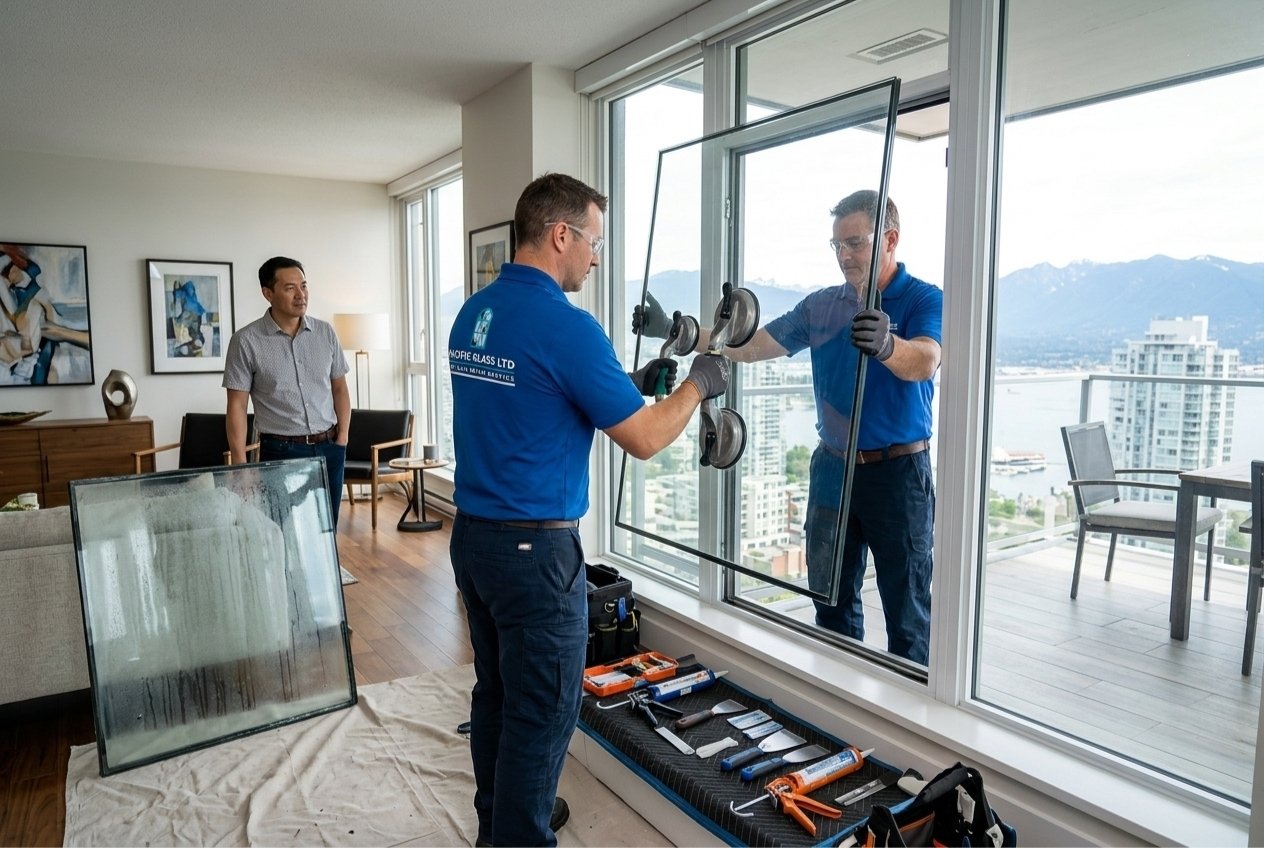
You can walk into a room and immediately feel it.
Nothing looks wrong. The furniture is elegant. The colors are on trend. The lighting is warm and intentional. The finishes are high-end.
And yet—something feels off.
The room feels heavy.
It feels closed.
It feels like time slows down inside it.
Most people can’t explain this feeling, but almost everyone recognizes it. The common factor in these spaces is often simple and invisible at first glance: the absence of windows.
Even the most beautifully designed room can feel psychologically uncomfortable without access to natural light and visual openness. This isn’t a design flaw—it’s a human response rooted in biology, psychology, and evolution.
At Pacific Glass Ltd, we’ve seen how adding or modifying glass transforms not just spaces—but how people feel inside them. This article explores why rooms without windows feel heavier, even when they’re beautiful, and what that means for modern living.
The Human Brain Is Wired for Light and Horizon
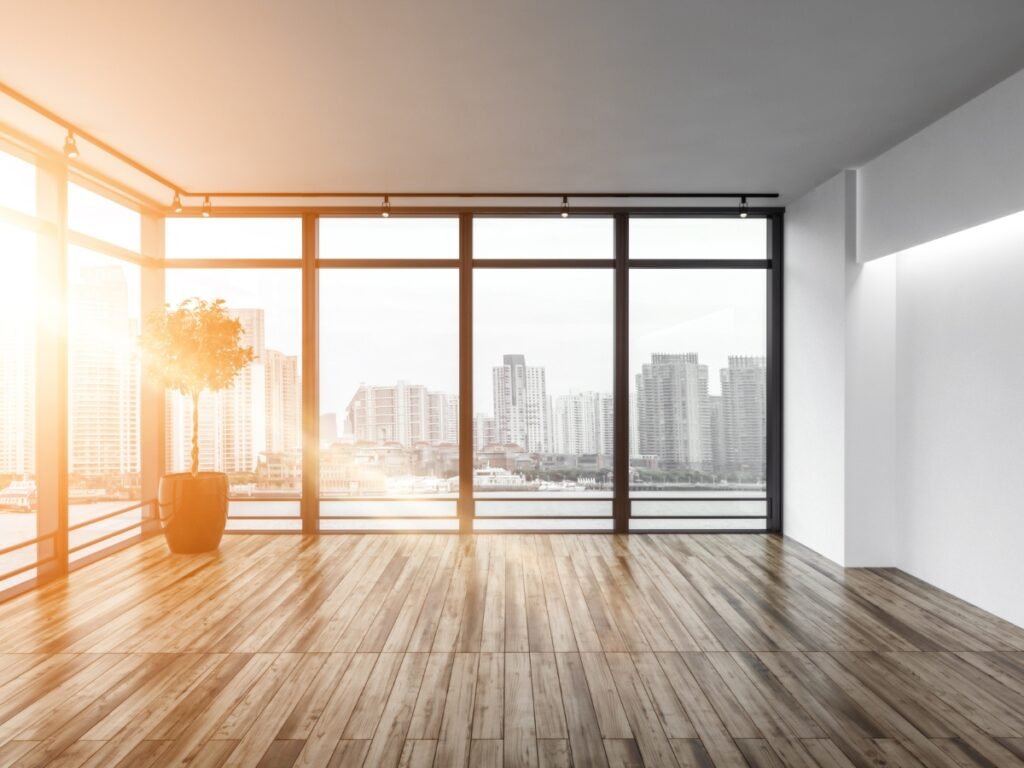
Humans evolved outdoors. For thousands of years, survival depended on light, visibility, and awareness of surroundings. Our brains learned to associate open views and daylight with safety, time awareness, and control.
When you remove windows, the brain loses key signals:
- Where am I in the day?
- Is the environment safe?
- How large is this space really?
- Is there an exit or connection to the outside world?
Without these cues, the brain enters a subtle state of tension.
This isn’t fear—it’s low-grade alertness. And that alertness is experienced emotionally as heaviness, fatigue, or restlessness.
Beauty Doesn’t Cancel Biology
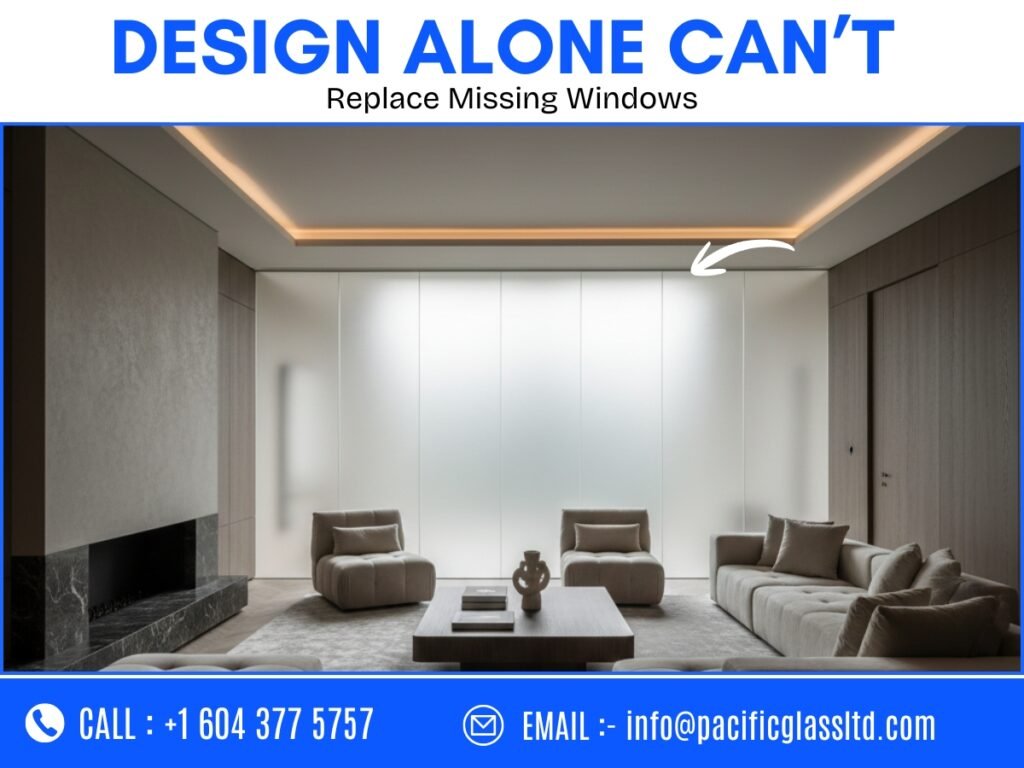
Interior design can do incredible things. It can add warmth, luxury, texture, and personality. But design alone cannot replace biological needs.
A windowless room can be:
- Perfectly decorated
- Professionally staged
- Architecturally impressive
And still feel emotionally dense.
Why? Because beauty engages the eyes, while windows engage the nervous system.
Light regulates circadian rhythms. Visual depth calms the brain. Natural movement outside a window reassures the subconscious that the world is continuing beyond the walls.
No amount of artificial lighting can fully replicate this effect.
Artificial Light Has Limits
Modern lighting is powerful. LEDs can mimic daylight tones. Smart systems adjust brightness throughout the day. Accent lighting adds drama and mood.
But artificial light lacks three critical qualities of natural light:
• Directionality – Sunlight changes angle throughout the day
• Variation – Clouds, shadows, movement
• Context – Light connected to an outdoor world
In windowless rooms, light becomes static. Even when it’s bright, the brain senses something unnatural. Over time, this contributes to mental fatigue.
This is why people often feel:
- More tired in windowless offices
- Less relaxed in interior bedrooms
- Mentally “boxed in” in basements or interior rooms
The Weight of Enclosure
Rooms without windows often feel smaller than they are. Even large rooms can feel compressed when all boundaries are solid.
This happens because visual depth is missing.
Glass creates perceived distance. A window extends the room beyond its physical limits. Without that extension, the walls feel closer. The ceiling feels lower. The air feels heavier.
This perceived compression affects posture, breathing, and comfort—even when we’re not aware of it.
Time Becomes Unclear
Windows do more than provide light—they tell time.
Morning light feels different than afternoon light. Evening shadows slow us down. Cloudy brightness softens mood.
In windowless spaces:
- Time feels suspended
- Days blur together
- Focus becomes harder to maintain
This is especially noticeable in:
- Home offices
- Bedrooms
- Interior living rooms
- Basement spaces
The brain relies on external cues to regulate energy. Without them, emotional balance becomes harder to maintain.
Silence Without Visual Movement Feels Heavier
A quiet room with a window feels peaceful.
A quiet room without one can feel unsettling.
Why?
Because windows provide visual movement:
- Trees shifting
- People passing
- Cars moving
- Light changing
This subtle motion reassures the brain. It reminds us that we’re connected to a larger environment.
In windowless rooms, stillness can feel absolute. For some people, this becomes calming—but for most, it slowly creates emotional weight.
Why Basements Often Feel Emotionally Dense
Basements are the most common example of this phenomenon.
Even finished basements with:
- High ceilings
- Beautiful flooring
- Modern furniture
Often feel heavier than upper floors.
The reasons include:
- Limited or no natural light
- Small or high-set windows
- Reduced sightlines
- Thicker walls and lower sound transmission
At Pacific Glass Ltd, we’ve seen how strategic glass solutions—larger windows, glass partitions, light-sharing designs—dramatically change how basements feel emotionally.
Transparency Reduces Mental Load
Glass doesn’t just let light in—it reduces cognitive effort.
When you can see:
- Where a space leads
- How areas connect
- What’s beyond the room
Your brain relaxes.
Opaque rooms require constant subconscious processing:
- Where am I?
- How enclosed is this?
- What’s happening outside this space?
Glass answers these questions instantly.
Privacy vs Isolation
Privacy is important. But privacy without light often turns into isolation.
Windowless rooms are sometimes chosen intentionally:
- For privacy
- For noise control
- For aesthetic minimalism
The issue arises when privacy removes all connection to the outside world.
Glass allows both:
- Privacy (through frosted, textured, or layered solutions)
- Connection (through light and visual openness)
This balance is where comfort lives.
Emotional Responses People Rarely Talk About
People often describe windowless rooms using emotional language:
- “Claustrophobic”
- “Heavy”
- “Draining”
- “Oppressive”
- “Flat”
These reactions aren’t personality flaws—they’re neurological responses.
The brain interprets enclosed spaces as environments with fewer options, less information, and reduced control. Over time, this subtly affects mood and energy.
Why We Gravitate Toward Windows Instinctively
Notice how people behave in shared spaces:
- Cafés fill seats near windows first
- Waiting rooms feel calmer near glass
- Homes naturally orient furniture toward windows
This isn’t coincidence.
Humans instinctively seek:
- Light
- Depth
- External reference points
When these are absent, we compensate with movement, distraction, or discomfort.
How Glass Softens Heavy Spaces
Glass doesn’t need to be a full exterior window to have impact.
Even interior glass can:
- Share light between rooms
- Increase visual depth
- Reduce the feeling of enclosure
- Create psychological breathing room
Options include:
- Interior glass walls
- Glass doors
- Transom windows
- Light-sharing partitions
- Frosted or textured glass panels
At Pacific Glass Ltd, we focus on solutions that preserve privacy while restoring emotional balance to enclosed spaces.
The Subtle Relief of Seeing the Sky
Even a small window can dramatically change a room’s emotional weight.
Seeing the sky—even briefly—signals openness, scale, and freedom. The brain interprets this as safety and possibility.
That’s why:
- Small basement windows still matter
- Clerestory windows feel uplifting
- Skylights transform interior rooms
It’s not about size—it’s about connection.
Why Beautiful Rooms Still Feel Wrong Without Windows
Beauty is visual. Comfort is emotional.
A room can impress guests and still quietly exhaust the people who live or work in it daily.
This is why some spaces:
- Photograph beautifully
- Feel uncomfortable to stay in
- Are avoided subconsciously over time
Windows don’t just complete a room—they humanize it.
Designing With the Brain in Mind
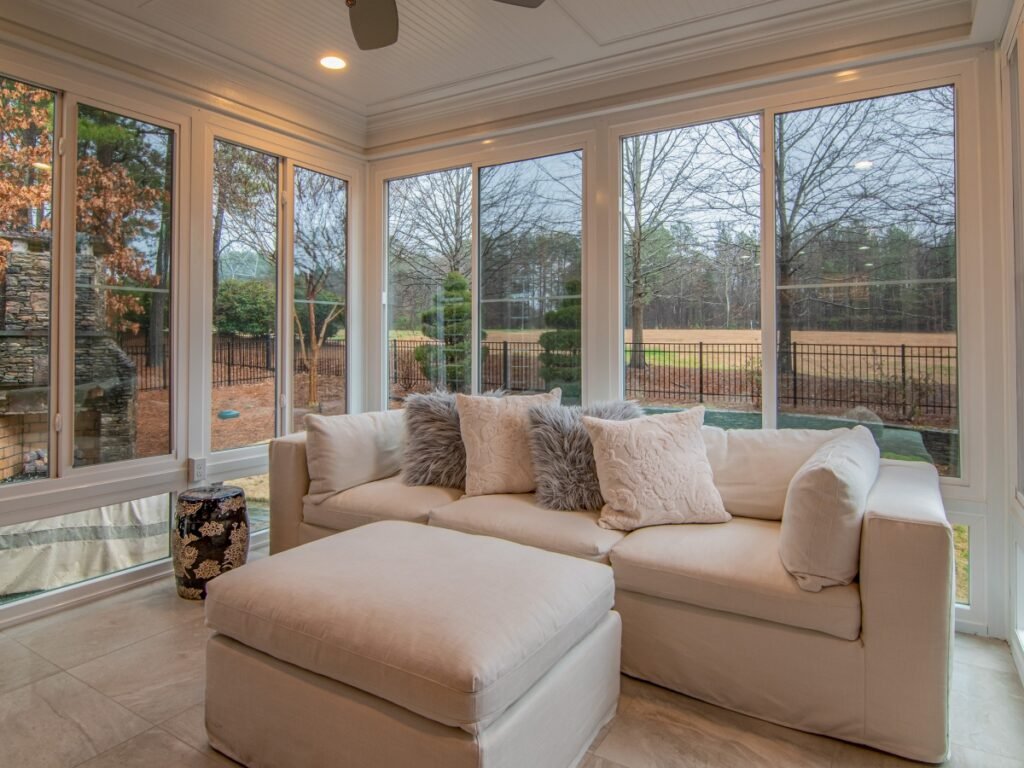
Modern design often prioritizes aesthetics, but the future of healthy spaces prioritizes how rooms feel over time.
When designing or renovating, consider:
- Where light enters
- How spaces visually connect
- Where the eye can rest
- How time is perceived inside the room
Glass is one of the most powerful tools available for achieving this balance.
Final Thoughts
Rooms without windows aren’t failures.
They’re simply incomplete from a human perspective.
When we understand why they feel heavy, we gain the ability to design better—not just more beautiful—spaces.
At Pacific Glass Ltd, we believe glass isn’t just a material. It’s a bridge between structure and emotion, between design and wellbeing.
Because the best spaces don’t just look good.
They feel right
FAQs
Without natural light and outdoor views, the brain perceives the space as enclosed, which can increase stress and mental fatigue.
Design helps, but without light or visual openness, even beautiful rooms can still feel closed and uncomfortable.
Natural light regulates mood, focus, and circadian rhythm. Its absence can make spaces feel dull or mentally draining.
Yes. Interior glass walls, transoms, and light-sharing panels can visually open the space and improve comfort.
Pacific Glass Ltd provides custom glass installations that help distribute light and reduce the heavy feeling of enclosed interiors.