Creating a healthy indoor environment isn’t just about decoration—it’s about designing spaces that nurture both the body and the mind. One of the most effective strategies involves the careful integration of glass barriers and indoor plants. When done right, this combination balances natural light, privacy, air quality, and mental well-being.
At Pacific Glass Ltd, we’ve worked on numerous projects in Burnaby and surrounding areas, helping clients design spaces that maximize daylight, support greenery, and maintain privacy. In this blog, we’ll explore the psychology, practical applications, and design strategies that make glass and plants an indispensable duo for healthy interiors.
The Science Behind Light, Privacy, and Wellbeing
Natural light is essential for both humans and plants. It regulates circadian rhythms, boosts mood, and encourages productivity. Glass barriers, like partitions, skylights, or floor-to-ceiling windows, allow light to penetrate spaces that would otherwise remain dark.
Indoor plants, meanwhile, contribute to air purification, stress reduction, and visual appeal. They thrive when exposed to adequate natural light, and their placement behind or around glass can enhance aesthetics without compromising privacy.
How Glass Enhances Plant Growth
- Transparent panels allow sunlight to reach deep into rooms, supporting photosynthesis.
- Frosted or patterned glass diffuses light, protecting sensitive plants from harsh glare while still providing energy.
- Skylights or glass roofs bring light to interior plants in large or closed-off areas.
🌱 Studies have shown that spaces filled with greenery improve focus, reduce anxiety, and elevate overall mood, making them essential for modern interiors.
Balancing Transparency and Privacy
Glass barriers are highly versatile—they can create open, airy environments while also maintaining private zones. This balance is crucial in homes, co-working spaces, and even healthcare or wellness facilities.
Strategies for Achieving Balance
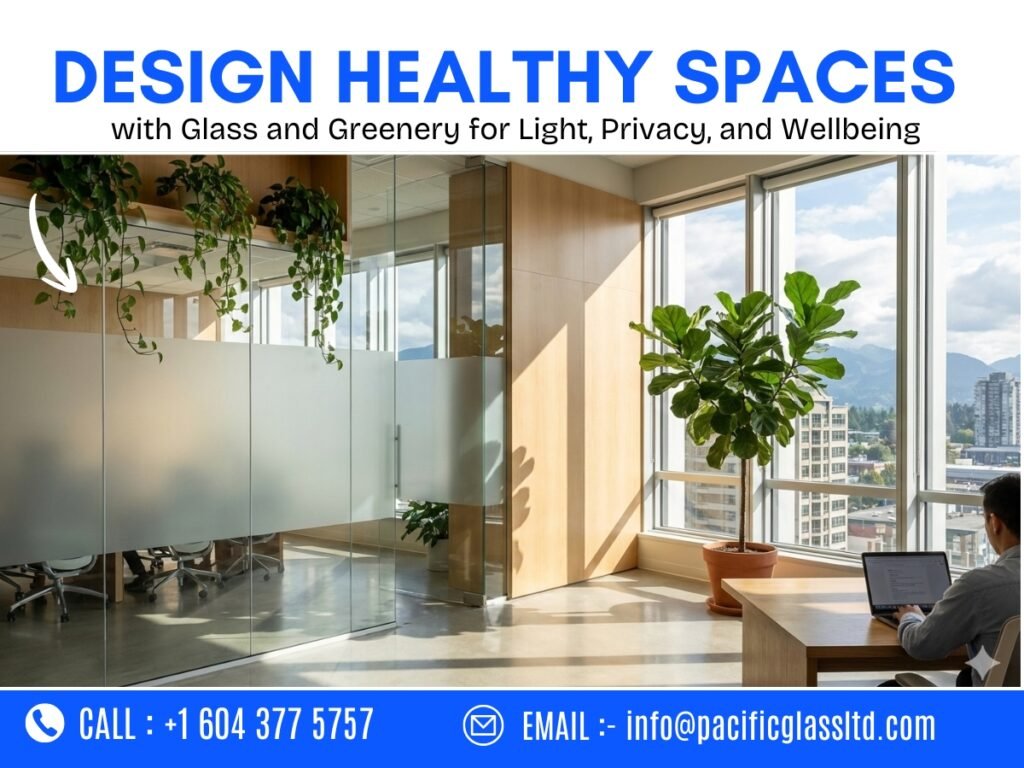
- Frosted Glass Panels: Use in areas that require discretion, like bedrooms or private seating nooks, while still letting light through.
- Partial Frosting: Apply frosting only to lower or upper sections to maintain visibility while preserving privacy.
- Planter Integration: Combine plant arrangements with glass partitions to create natural visual barriers.
💡 The goal is to maximize natural light while reducing overexposure, creating spaces that feel both open and protected.
Integrating Indoor Plants with Glass
Plants and glass can work together in numerous ways to enhance aesthetics, air quality, and mental well-being.
Vertical Gardens and Green Walls
Glass walls can serve as backdrops for vertical gardens or living walls:
- Visual Connection: Transparent or semi-transparent walls allow plants to be seen from multiple angles.
- Light Diffusion: Glass can soften direct sunlight, preventing leaf burn.
- Space Maximization: Vertical planting saves floor space while maintaining greenery throughout the room.
Tabletop and Shelf Plants
Small planters placed along glass partitions or near windows:
- Enhance privacy subtly.
- Act as visual buffers between workspaces or living areas.
- Benefit from natural light exposure.
Hanging Plants
Hanging planters in front of clear glass panels:
- Create a floating green barrier.
- Filter light and provide shade to interior spaces.
- Add vertical interest without cluttering the floor.
🌿 Combining these strategies makes interiors more dynamic, healthy, and visually appealing.
The Psychological Benefits of Green Spaces
Plants improve mental health and cognitive function in multiple ways:
- Stress Reduction: Studies show indoor plants lower cortisol levels and reduce tension.
- Improved Focus: Visual access to greenery can increase concentration and task performance.
- Mood Enhancement: The presence of plants contributes to feelings of calm, happiness, and comfort.
Glass walls amplify these benefits by ensuring plants are visible from different zones in the room, creating a continuous connection to nature.
Glass Types and Their Impact
Not all glass is created equal. Choosing the right type is essential for balancing light, privacy, and safety.
Clear Glass
- Maximizes light penetration.
- Creates a sense of openness.
- Ideal for plant display areas or living rooms.
Frosted Glass
- Diffuses sunlight to prevent harsh glare on sensitive plants.
- Maintains privacy in bedrooms, bathrooms, or meditation spaces.
- Softens overall visual appearance.
Laminated Glass
- Provides safety while allowing light through.
- Can be combined with frosted or etched designs for aesthetic appeal.
⚠️ Tip: Pacific Glass Ltd recommends tempered or laminated options for spaces where safety is a concern, particularly in homes with children or pets.
Practical Design Tips for Healthy Spaces
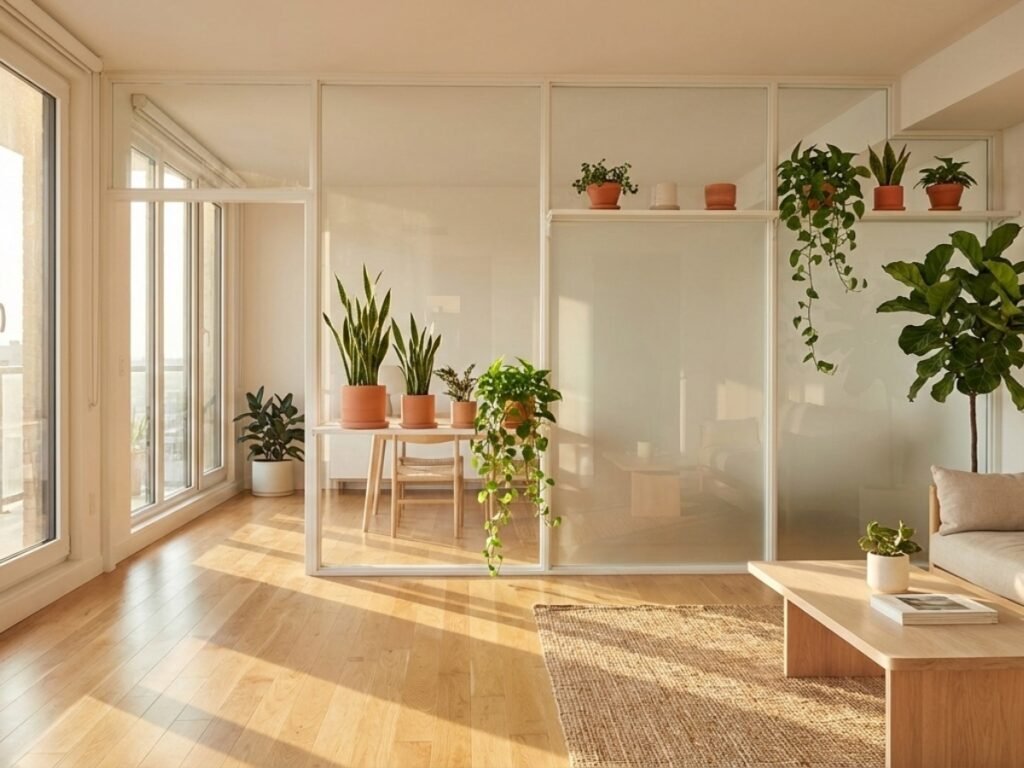
When designing interiors with glass and plants, several practical considerations help achieve optimal results:
- Sunlight Analysis: Assess how natural light moves through your space and adjust plant placement accordingly.
- Glass Orientation: Use clear panels for sunny spots and frosted panels for private or shaded areas.
- Plant Selection: Choose species suitable for your light conditions. Low-light plants like snake plants or philodendrons thrive behind frosted glass.
- Maintenance Accessibility: Ensure plants near glass walls are easy to water and prune.
- Furniture Integration: Incorporate shelves or stands near glass walls to maximize space usage.
Recommended Plant Placement by Glass Type
| Glass Type | Ideal Placement | Plant Suggestions | Benefits |
| Clear Glass | Near windows, reception areas | Fiddle Leaf Fig, Rubber Plant | Maximum light, visual connection |
| Frosted Glass | Bedrooms, bathrooms, meditation spaces | Snake Plant, ZZ Plant | Privacy with soft lighting |
| Laminated Glass | High-traffic areas | Spider Plant, Pothos | Safety with greenery |
Combining Privacy, Light, and Aesthetic Appeal
Designers often face the challenge of balancing privacy, light, and aesthetic appeal. Glass and plants allow you to:
- Partition spaces naturally: Planters combined with frosted panels create soft divisions.
- Maintain visual openness: Clear glass allows connectivity across rooms.
- Enhance air quality: Plants naturally purify indoor air while creating vibrant scenery.
💡 Example: A Burnaby wellness center installed frosted glass partitions with trailing plants. Clients could see greenery from the reception area, maintaining openness while ensuring private consultation zones.
Enhancing Wellbeing Through Strategic Design
Using glass and plants strategically can enhance physical, mental, and emotional wellbeing:
- Light Regulation: Frosted and clear glass options help manage light intensity.
- Air Quality Improvement: Plants remove toxins and increase oxygen levels.
- Psychological Comfort: Glass barriers reduce the feeling of confinement while providing a sense of separation.
- Biophilic Design: Natural elements like plants combined with light improve mood, productivity, and creativity.
🌿 Studies indicate that people working or living in environments with ample light and greenery report higher satisfaction and lower stress levels.
Final Thoughts
Glass barriers and indoor plants are more than decorative elements—they are key components of healthy, productive, and visually appealing spaces. By combining natural light, transparent or frosted glass, and strategically placed greenery, you can create environments that:
- Promote mental well-being and focus
- Enhance privacy while maintaining openness
- Improve air quality and aesthetics
- Support both residential and commercial space functionality
At Pacific Glass Ltd in Burnaby, we specialize in creating custom glass solutions that integrate seamlessly with indoor plant design, ensuring spaces are safe, beautiful, and psychologically optimized.
🌿 Thoughtful glass and plant integration transforms spaces, creating interiors where people feel inspired, comfortable, and connected to nature.
FAQs
Yes, vertical gardens, hanging plants, and transparent glass maximize light and maintain the perception of spaciousness.
Not necessarily. Frosted glass diffuses sunlight, protecting sensitive plants while still providing adequate light for growth
Choose low-maintenance species, monitor light exposure, and ensure easy access for watering and pruning.
Absolutely. Visible greenery combined with natural light reduces stress, improves mood, and boosts productivity.
Yes, for safety. Laminated or tempered glass ensures that if an accident occurs, the risk of injury is minimized while still allowing light to flow through.

JAP Jabar is the highly skilled and experienced owner of Pacific Glass Ltd, a trusted leader in glass services throughout British Columbia, Canada. With over 15 years of experience in glass repair, installation, and design, JAP has built a strong reputation for excellence in providing top-tier glass solutions, including glass doors, windows, railings, balconies, and more. Whether it’s residential or commercial, JAP is committed to delivering quality and precision in every project. Pacific Glass Ltd offers a wide range of services, from sliding doors and swing doors to storefront glass, patio glass doors, mirror services, and shower glass installations, ensuring customers receive the best in durability, aesthetics, and functionality.
Pacific Glass Ltd serves clients across Burnaby, Vancouver, and greater British Columbia with a focus on offering high-end glass solutions that meet the unique needs of each space. JAP’s expertise spans multiple types of glass services, including glass & sealed unit replacement, windows repair, commercial doors, fixed walls, glass canopies, and more. As a locally owned and operated business, JAP’s commitment to excellence shines through in every project, earning him a reputation as one of the leading glass specialists in the area.