People often think windows simply let light in. A rectangle or a square—what does the shape really matter, right?
But the truth is much deeper.
The moment a shape frames outside light, it becomes a lens of emotion. A view is not just seen; it is experienced. Your windows create boundaries, illusions, expectations, and subconscious cues that determine how big or small, calm or lively, grounded or open your home feels.
This interplay is what we call The Geometry of View.
It is where mathematics meets psychology. Where architecture meets emotion. And where Pacific Glass LTD reshapes spaces using one of the most powerful but misunderstood tools in home design—window geometry.
Why Geometry Changes Space Perception
Different window shapes create different psychological and spatial effects. They manipulate:
- Depth
- Height
- Width
- Openness
- Light flow
- Emotional tone
To understand this fully, we must understand something deeper:
Your brain reacts to shapes long before you consciously process them.
Rounded shapes calm.
Tall shapes uplift.
Wide shapes relax.
Sharp shapes energize.
Because window geometry controls the visual narrative of the outside world, it also controls how space feels inside.
The Four Primary Forces of Window Geometry
To understand how shapes influence rooms, let’s break it into four sensory forces:
| Force | What It Controls | Effect on the Room |
| Verticality ↑ | Height perception | Makes ceilings feel taller, adds elegance |
| Horizontality → | Width perception | Makes spaces feel wider, calmer |
| Curvature ○ | Emotional softness | Creates calm, flow, and gentle visuals |
| Angles ◻ | Structural clarity | Adds sharpness, order, energy |
Every window shape is a combination of these forces.
How Popular Window Shapes Change the Feeling of Space
1. Rectangular Windows — The Universal Frame
Rectangles are stable, predictable, and traditional. They are the most balanced shape in spatial design.
What they do emotionally:
- Create order
- Provide structure
- Make rooms feel grounded
Why homeowners choose them:
Because they never compete with the room—they complement it.
Pacific Glass LTD often uses modified rectangular geometries (thin frames, premium glazing, extended height) to stretch their natural effect. With proper proportions, even a standard shape becomes extraordinary.
2. Arched Windows — The Gentle Lift
Arches soften a home’s emotional language. They are timeless, romantic, and soothing.
Effects on space:
- Lift perception upward
- Add grandeur
- Create softness in the geometry of the room
Why they work:
Curved tops shift the eye gently. Nothing feels abrupt.
An arched window is not simply a design choice; it is an emotional signal.
3. Circular Windows — The Eye of the Home
Circles create a focal point that feels intentional and striking.
What circles do psychologically:
- Capture attention instantly
- Introduce harmony
- Add a sense of infinity
Circular windows interrupt the strict geometry of walls. They remind us that architecture can be playful, symbolic, and expressive.
4. Panoramic Windows — The Horizon Stretchers
These windows reshape your understanding of space entirely.
Effects:
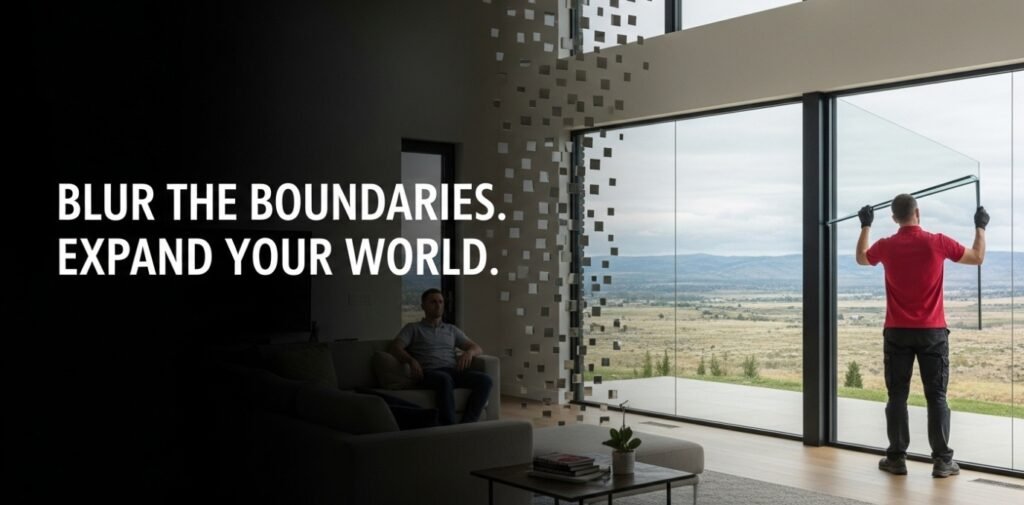
- Blur boundaries between inside and outside
- Expand width
- Make small rooms feel surprisingly large
When Pacific Glass LTD installs panoramic views, homeowners often describe the effect as:
“My house feels like it breathed for the first time.”
Because these windows don’t just show the view.
They merge with it.
5. Ribbon Windows — The Line of Light
Thin, horizontal windows placed near the ceiling or mid-wall line create unique architectural movements.
Spatial reaction:
- Makes ceilings feel higher
- Creates a modern, sculptural light flow
- Adds sophistication through restraint
Ribbon windows are light with intention—subtle but brilliant.
How Geometry Manipulates Light (and Why That Matters)
Shape decides how light enters.
Light decides how your home feels.
Below is a comparison of how each geometry alters illumination:
| Shape | Light Distribution | Mood Created |
| Rectangle | Even and structured | Balanced, functional |
| Arch | Softened center light | Calm, uplifting |
| Circle | Radiant highlight zones | Artistic, focused |
| Panorama | Wide, immersive light | Energizing, expansive |
| Ribbon | Linear beam movement | Modern, minimal, dynamic |
Light is the architect you don’t see.
Glass is the architect you choose.
Geometry is the bridge between them.
The Emotional Vocabulary of Window Shapes
Let’s break it down into a symbolic emotional chart:
| Shape | Emotional Tone |
| Circle | Unity, softness, clarity |
| Arch | Serenity, elegance, upward flow |
| Square | Order, safety, structure |
| Landscape Rectangle | Calmness, relaxation |
| Portrait Rectangle | Ambition, height, openness |
| Angular Shapes | Energy, activity, sharp focus |
Your windows tell a story about how you want a room to feel.
Pacific Glass LTD helps translate that story into geometry.
How Changing Window Shape Changes Room Purpose
Living Room
Panoramic, arched, or landscape rectangles transform the living room into a social, open, elegant environment.
Bedrooms
Soft shapes like arches or small round windows encourage rest.
Home Offices
Vertical rectangles sharpen focus.
Ribbon windows distribute consistent light for productivity.
Kitchen
Geometric combos offer energy without harshness.
Window shapes and room purpose must work together—or the room always feels slightly “off.”
Why the Geometry of View Influences Mental Comfort
Here is the hidden truth:
Your brain interprets space based on geometric cues.
Tall windows = mental uplift
Wide windows = ease
Circular windows = emotional grounding
Angled windows = alertness
Geometry shapes mood long before design choices catch up.
How Pacific Glass LTD Designs with Geometry Intentionally
Pacific Glass LTD follows a design philosophy called:
Geometry-Integrated Comfort Mapping
This approach includes:
- Studying how the homeowner moves inside the space
- Mapping emotional zones (rest zones, activity zones, focus zones)
- Designing glass shapes to match desired emotional outcomes
- Using premium materials so shape isn’t just visual—it performs
The result is not just a window.
It is a spatial instrument.
A tool that shapes how the room feels every single day.
A New Way to Think About Home Design
Window shape shouldn’t be chosen because it looks nice.
It should be chosen because:
- It changes how you breathe in the room
- It affects your perception of time
- It alters how light interacts with surfaces
- It redefines how big or small a space feels
- It changes mood, productivity, calm, and clarity
Most homeowners underestimate window geometry.
But once you understand it, you realize:
It is the strongest silent architect in your home.
FAQs
Yes. Geometry changes how the eye reads depth, height, and width, significantly altering spatial perception.
Yes. Landscape rectangles, panoramic windows, and ribbon windows help small rooms feel larger and more open.
Curved shapes like arches and circles soften visual noise and naturally calm the brain.
We analyze spatial flow, interior style, and emotional targets, then design geometry that fits the home’s psychology and architecture.

JAP Jabar is the highly skilled and experienced owner of Pacific Glass Ltd, a trusted leader in glass services throughout British Columbia, Canada. With over 15 years of experience in glass repair, installation, and design, JAP has built a strong reputation for excellence in providing top-tier glass solutions, including glass doors, windows, railings, balconies, and more. Whether it’s residential or commercial, JAP is committed to delivering quality and precision in every project. Pacific Glass Ltd offers a wide range of services, from sliding doors and swing doors to storefront glass, patio glass doors, mirror services, and shower glass installations, ensuring customers receive the best in durability, aesthetics, and functionality.
Pacific Glass Ltd serves clients across Burnaby, Vancouver, and greater British Columbia with a focus on offering high-end glass solutions that meet the unique needs of each space. JAP’s expertise spans multiple types of glass services, including glass & sealed unit replacement, windows repair, commercial doors, fixed walls, glass canopies, and more. As a locally owned and operated business, JAP’s commitment to excellence shines through in every project, earning him a reputation as one of the leading glass specialists in the area.