Sliding glass doors are a popular feature in homes and patios across Vancouver and the Lower Mainland. They bring in natural light, connect indoor and outdoor spaces, and give a clean, modern look to any room. However, over time, sliding glass doors can start to stick, squeak, or become hard to open and close—all of which usually come from dry, dirty, or poorly lubricated tracks and rollers.
If you’re wondering how to lubricate a sliding glass door properly (without damage), you’re in the right place. At Pacific Glass Ltd, we work with homeowners in Vancouver and the surrounding areas every day to keep their sliding glass doors, glass doors, and patio doors running smoothly and safely. This guide will walk you through every step in detail: understanding your door components, choosing the right lubricant, cleaning the track safely, applying lubrication carefully, and maintaining your door for long‑lasting, smooth operation. You’ll also learn how to spot when it’s time to call a professional—especially for heavy glass doors or complex hardware.
Why Lubricating a Sliding Glass Door Matters
Sliding glass doors combine heavy glass panels, metal or vinyl tracks, rollers, and weather seals. All of these parts work together to let the door glide smoothly. When one of them is dry, dirty, or poorly lubricated, the whole system feels stiff or rough.
Skipping regular maintenance can lead to:
- Extra strain on the glass frame and hardware.
- Increased wear on rollers and tracks.
- Harder operation, which can lead to forced pushing or banging on the glass.
- Possible misalignment or binding that makes the door unsafe to use.
Properly lubricating your sliding glass door helps it move smoothly, keeps components in good condition, and extends the life of your door. In humid coastal climates like Vancouver’s, this is especially important, as moisture, dust, and pollen can build up quickly in outdoor tracks.
Local glass specialists like Pacific Glass Ltd often see sliding doors that could have been saved with a simple cleaning and lubrication schedule—but instead, owners wait until the tracks are completely gummed up or the rollers are worn out. A little care now can prevent big repairs later.
Understanding Your Sliding Glass Door Components
Before you start applying lubricant, it helps to know what you’re working with. Most residential sliding glass doors have these main parts:
- Glass panel(s): One or two heavy glass panels, either clear, tempered, or tinted.
- Frame and tracks: The top and bottom metal or vinyl tracks that guide the door as it slides.
- Rollers: Small wheels (often hidden under the bottom edge of the panel) that carry the weight of the glass and allow it to glide.
- Weatherstripping and seals: Rubber or silicone strips that keep water, wind, and insects out.
- Handle and locks: The hardware you use to open, close, and secure the door.
The bottom track and rollers are the main areas you’ll lubricate, as they bear the most friction and wear. The top track mostly guides the door and needs less frequent attention, but it still benefits from light cleaning and minimal lubrication if needed.
If you ever plan to replace or upgrade your sliding glass door, Pacific Glass Ltd can help you choose a model that’s easy to maintain and suited to your Vancouver climate and lifestyle.
Recognizing When Your Door Needs Lubrication
You don’t need to wait until your sliding glass door squeaks loudly to lubricate it. Watch for these common signs:
- The door feels stiff or heavy when you slide it.
- You hear squeaking, grinding, or scratching noises.
- The door doesn’t roll smoothly and gets “sticky” in certain spots.
- The rollers seem to skip or jump instead of rolling consistently.
- There is visible dust, sand, or grime in the track.
If you notice any of these issues, your sliding glass door is likely under‑lubricated or has built‑up dirt. If the door is very hard to move, misaligned, or shows visible damage to the glass, frame, or rollers, it’s wise to stop using it and call a professional rather than forcing it or over‑lubricating.
A local glass and door service like Pacific Glass Ltd can inspect your sliding glass door, clean the track properly, lubricate it the right way, and replace worn rollers or hardware if needed.
Choosing the Right Lubricant (Without Damaging Your Door)
Not all lubricants are safe for sliding glass doors. Using the wrong product can attract dirt, stain the frame, or damage weatherstripping and seals. Here’s what to use and what to avoid:
Safe Lubricants for Sliding Glass Doors
- Silicone‑based spray lubricant
This is the best choice for most sliding glass doors. It’s water‑resistant, doesn’t attract too much dust, and doesn’t damage rubber seals or vinyl tracks. It comes in a light aerosol spray that’s easy to control. - Dry‑type or wax‑based lubricant
Some dry lubricants or silicone‑based dry sprays are designed specifically for tracks and sliders. They leave a thin protective film without making the surface oily or slippery. - Light machine oil (sparingly)
In some cases, a light machine oil applied very sparingly to metal rollers can help, but it’s easy to over‑use and attract dirt. Only use a small amount if you’re experienced and can clean the track afterward.
Lubricants You Should Avoid
- WD‑40 as a main lubricant
WD‑40 is great for freeing stiff hardware, but it’s more of a penetrating oil than a long‑lasting lubricant. It can dry out over time and may attract grime in the track. Use it only for stubborn spots, and follow up with a proper silicone‑based lubricant such as the types recommended by glass and door professionals. - Silicone caulk or household oils
These are not designed for moving parts and can gum up tracks or damage seals. - Grease or heavy oil
Thick products can trap dirt and sand, making the track even harder to slide. They can also stain vinyl and carpet near the door.
When in doubt, silicone‑based spray labeled for doors, windows, or tracks is your safest bet for how to lubricate a sliding glass door properly (without damage). If you’re unsure which product is best for your home in Vancouver, you can always ask a glass or door specialist like Pacific Glass Ltd for a recommendation.
Step‑By‑Step: How to Lubricate a Sliding Glass Door Properly
Now that you know what to use, here’s a clear, step‑by‑step process for how to lubricate a sliding glass door properly (without damage).
Step 1: Open the Door and Check for Damage
- Fully open the sliding glass door and close it slowly to observe how it moves.
- Look for cracks, chips, or obvious damage to the glass, frame, or seals.
- If the glass looks cracked, the frame is warped, or the rollers are missing or broken, stop and do not force the door. Contact a glass or door specialist such as Pacific Glass Ltd for a professional inspection and repair.
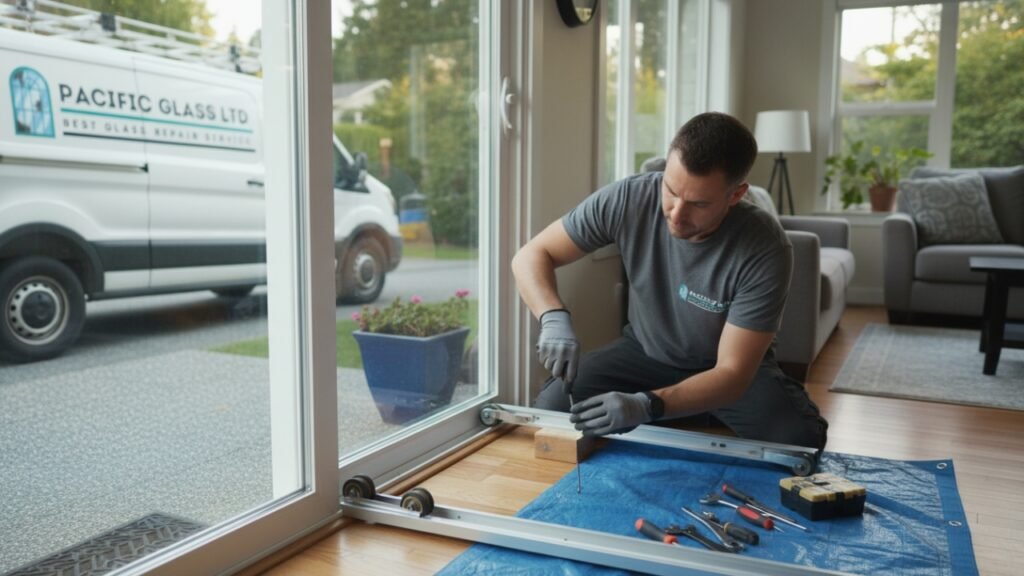
Step 2: Remove the Sliding Panel (If Applicable)
Many sliding glass doors allow you to lift the moving panel out of the track for easier cleaning and lubrication.
- Open the door about halfway.
- Locate the adjustment screws on the bottom edge of the panel (often under a small metal cover).
- Use a screwdriver to lower the rollers slightly so the panel can be lifted.
- Hold the panel firmly with both hands, lift it up and out of the bottom track, and place it on a soft surface (like a blanket or carpet) to protect the glass.
If your door design doesn’t allow panel removal, you can still clean and lubricate the tracks carefully without taking the glass out, but be extra gentle.
For heavy or older sliding glass doors, Pacific Glass Ltd often recommends leaving removal and re‑installation to trained technicians to avoid injury or damage.
Step 3: Clean the Tracks and Rollers
Lubricating a dirty track will only make it gummy and worse. Always clean first.
- Use a vacuum with a narrow nozzle to remove loose dust, dirt, leaves, and debris from the bottom track.
- For stubborn grime or sand, use a soft brush (like an old toothbrush or a small paintbrush) and a bit of soapy water.
- Wipe the track thoroughly with a clean, dry cloth to remove moisture and residue.
- If the rollers are exposed, clean them similarly with a brush and dry cloth.
Avoid using harsh chemicals or abrasive pads that can scratch metal or vinyl. If you find rust on metal tracks, a mild rust‑removing spray (followed by thorough wiping) can help, but follow the product instructions carefully.
If you notice that the track is badly rusted, bent, or damaged, it may need professional repair or replacement. Pacific Glass Ltd can inspect and replace corroded tracks or corroded rollers to keep your sliding glass door safe and smooth.
Step 4: Inspect and Adjust the Rollers
While the panel is out (or visible), take a moment to inspect the rollers:
- Look for cracks, flattening, or wobbling.
- Check that both rollers are at the same height so the door sits level in the track.
If one roller appears damaged, worn, or misaligned, it may need replacement. For glass‑heavy panels, it’s best to have a professional handle this, as rollers are often built into the frame and can be tricky to replace safely.
If the rollers are in good condition:
- Use the adjustment screws to slightly raise or lower them if the door is uneven or catches in one spot.
- Test the door’s movement once reinstalled and fine‑tune as needed.
Pacific Glass Ltd can help you check and adjust rollers if you’re unsure how to do this safely in your Vancouver home.
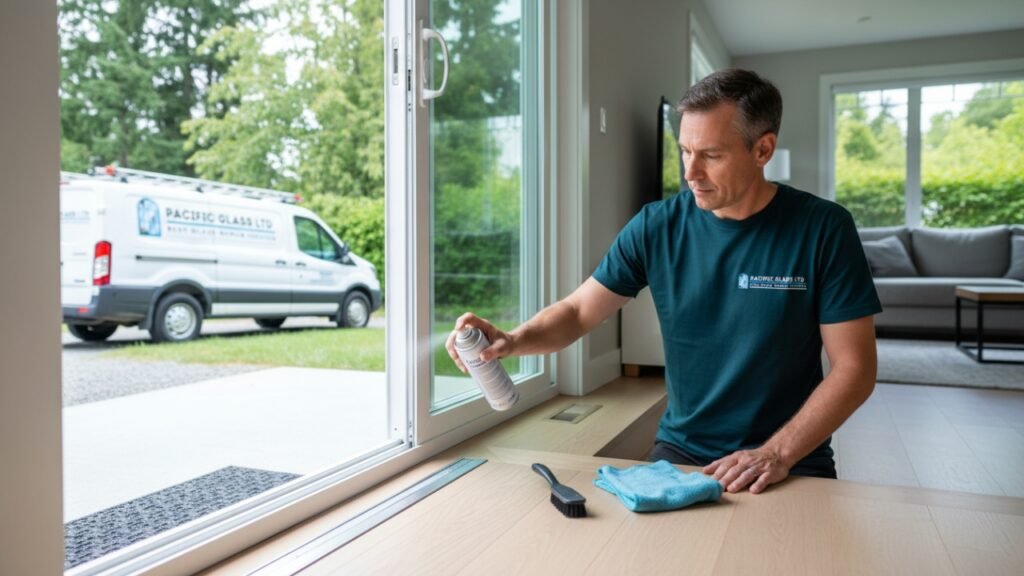
Step 5: Apply Lubricant to the Track and Rollers
Now you’re ready to lubricate the sliding glass door the right way. Remember: less is more.
- Lubricating the bottom track:
- Hold the silicone‑based lubricant spray about 6–10 inches from the track.
- Apply a thin, even coat along the entire length of the track.
- Avoid spraying directly onto carpets, flooring, or nearby furniture.
- Lubricating the rollers (if accessible):
- Apply a small amount of lubricant directly to each roller or to the area where the rollers roll.
- Rotate the roller slightly by hand to spread the lubricant evenly.
- Wipe away any excess with a cloth to keep the track clean.
- Lubricating the top track (optional):
- If the top track is metal and you notice roughness or sticking, use a very light spray of silicone lubricant.
- Do not soak the track; a thin mist is enough.
Allow the lubricant to settle for a few minutes, following the product’s instructions for any drying time.
For complicated or high‑traffic doors, Pacific Glass Ltd can apply professional‑grade lubricants and ensure everything is calibrated so your sliding glass door glides smoothly.
Step 6: Reinstall and Test the Door
- If you removed the panel, carefully slide it back into the bottom track and gently lower it so the rollers engage.
- Close the door fully and open it slowly several times to distribute the lubricant.
- Check that the door moves smoothly without catching, jumping, or squeaking.
If the door still feels stiff or unusual:
- Verify the track is clean and free of obstructions.
- Recheck the roller height and alignment.
- If problems persist, reduce the amount of lubricant and retest.
If the door suddenly becomes too loose or wobbly after adjustment, this can mean the rollers are positioned incorrectly. Adjust them back to balance the door’s weight and movement.
If you’re unsure how to reinstall the panel or adjust the rollers, Pacific Glass Ltd can handle the re‑installation and fine‑tuning so your sliding glass door operates safely and smoothly.
Common Mistakes When Lubricating a Sliding Glass Door
Even when following the right steps, homeowners often make small mistakes that either reduce the door’s performance or cause damage. Avoid these common errors:
- Over‑lubricating the track
Too much lubricant attracts dust, sand, and grime, turning the track into a sticky mess. Use a light, even coat and wipe away excess. - Using the wrong lubricant
WD‑40, heavy grease, or household oils can gum up the track or damage seals. Stick to silicone‑based or dry‑type products recommended for doors and windows. - Forcing the door when it’s sticking
If the door is very hard to move, forcing it can damage the rollers, frame, or even the glass. Instead, stop, clean the track, adjust the rollers, and consider professional help if needed. - Skipping regular cleaning
Lubricating without cleaning will only cover the dirt and make the track worse over time. Clean the track every few months, depending on your environment. - Ignoring visible damage
Cracks in the glass, bent frames, or missing rollers are safety hazards. If you see anything like this, avoid using the door and call a glass or sliding‑door specialist as soon as possible.
If you ever feel unsure whether you’re doing the job right, companies like Pacific Glass Ltd can inspect your sliding glass door and apply the correct lubrication and adjustments for you.
When to Call a Professional Instead of DIY Lubrication
There are times when DIY lubrication simply isn’t safe or effective, especially with glass doors and frames. Consider calling a professional like Pacific Glass Ltd if:
- The glass is cracked, chipped, or separating from the frame.
- The door is misaligned, rubbing against the frame, or hard to close and lock.
- Rollers are missing, broken, or cannot be adjusted properly.
- You suspect the door is sagging or the frame is bent.
- You’re unsure how to remove the panel or handle the glass safely.
- Cleaning and lubrication don’t solve the sticking or squeaking issue.
Professionals have the right tools, safety equipment, and experience to handle heavy glass safely. They can realign the door, replace damaged components, and recommend long‑term maintenance steps tailored to your Vancouver home or patio.
In many cases, Pacific Glass Ltd can fix minor issues during a single visit, saving you time and preventing further damage.
How Often Should You Lubricate a Sliding Glass Door?
How often you lubricate depends on your environment and how often you use the door. As a general guideline:
- Indoor sliding glass doors:
Every 6–12 months, especially if they’re used frequently or in dusty areas. - Outdoor patio sliding glass doors:
Every 3–6 months, especially in coastal or humid areas where dust, sand, and moisture accumulate in the track.
Between lubrications, simple cleaning and visual checks can keep the door running smoothly. If you notice stiffness or noise earlier than the recommended schedule, clean and lubricate sooner.
For homes with multiple sliding doors or high‑traffic patios, Pacific Glass Ltd can create a simple maintenance schedule so you know exactly when to check and lubricate each door.
Tips for Long‑Term Maintenance of Your Sliding Glass Door
To keep your sliding glass door operating smoothly for years, follow these easy maintenance habits:
- Keep the track clear of leaves, sand, pet fur, and debris.
- Vacuum or brush the track periodically, especially after storms or windy days.
- Occasionally wipe the glass and seals with a mild cleaner to prevent buildup.
- Check roller height and alignment if you notice the door dragging or catching.
- Avoid slamming the door or using it as a main “air‑flow” control by leaving it partially open all the time.
- Replace worn weatherstripping or seals promptly to keep air and water out.
If you ever decide to upgrade your sliding glass door (for example, replacing an older style with a modern, energy‑efficient design), reach out to a local glass and door specialist such as Pacific Glass Ltd for professional advice and installation. A new door designed for easy maintenance can make your life much easier in the long run.
Final Thoughts – How to Lubricate a Sliding Glass Door Properly
Knowing how to lubricate a sliding glass door properly (without damage) keeps it smooth, safe, and easy to use for years. Choose a silicone‑based lubricant, clean the track first, and avoid over‑applying. If you ever feel unsure, or notice cracks, misalignment, or broken rollers, contact Pacific Glass Ltd for a professional inspection and repair so your sliding glass door stays safe and functional in your Vancouver home.
FAQs
For most homes, cleaning the track every 3–6 months and lubricating it every 6–12 months keeps doors running smoothly. If you live near the coast or in a dusty area, you may want to clean more often and lubricate at least twice a year.
You can use WD‑40 to free up a very stiff or stuck track, but it’s not ideal as a long‑term lubricant. It can dry out over time and may attract dirt. If you use it, follow up with a proper silicone‑based lubricant and clean the track periodically.
If you’re comfortable and your door design allows it, careful removal can make cleaning and lubrication easier. However, glass panels are heavy and fragile. If you’re unsure, or if the door is high‑traffic or in a multi‑story home, it’s safer to leave the panel in place and clean the track without removing it—or to call a professional like Pacific Glass Ltd.
If lubrication doesn’t solve the problem, check for obstructions, misaligned rollers, or damage to the frame or glass. If you see damage or the door feels unsafe, stop using it and contact a glass or door specialist. Further adjustment or replacement may be needed.
Lubricating the door improves how smoothly it opens and closes, but it doesn’t directly affect energy efficiency. However, a well‑maintained door moves easier, which can help ensure weatherstripping and seals work correctly, reducing air leaks over time.

JAP Jabar is the highly skilled and experienced owner of Pacific Glass Ltd, a trusted leader in glass services throughout British Columbia, Canada. With over 15 years of experience in glass repair, installation, and design, JAP has built a strong reputation for excellence in providing top-tier glass solutions, including glass doors, windows, railings, balconies, and more. Whether it’s residential or commercial, JAP is committed to delivering quality and precision in every project. Pacific Glass Ltd offers a wide range of services, from sliding doors and swing doors to storefront glass, patio glass doors, mirror services, and shower glass installations, ensuring customers receive the best in durability, aesthetics, and functionality.
Pacific Glass Ltd serves clients across Burnaby, Vancouver, and greater British Columbia with a focus on offering high-end glass solutions that meet the unique needs of each space. JAP’s expertise spans multiple types of glass services, including glass & sealed unit replacement, windows repair, commercial doors, fixed walls, glass canopies, and more. As a locally owned and operated business, JAP’s commitment to excellence shines through in every project, earning him a reputation as one of the leading glass specialists in the area.