A sliding glass door that makes noise when opening can be frustrating, but it usually has a simple cause. Most noise—squeaking, grinding, or scraping—comes from dirt, dry tracks, misaligned rollers, or worn hardware. The good news: in many cases, you can fix it yourself with a little cleaning, lubrication, and adjustment. If the noise is coming from the glass itself or the frame feels loose, it’s best to call a local glass and door specialist like Pacific Glass Ltd for a professional inspection and repair.
Why Your Sliding Glass Door Makes Noise When Opening
Sliding glass doors use heavy glass panels, frames, tracks, and rollers. When any part is dirty, misaligned, or worn out, friction increases and the door starts making noise as it opens or closes. Common causes include:
- Dust, sand, or leaves stuck in the bottom track.
- Dry or gummed‑up lubricant in the track or on the rollers.
- Rolls that are misaligned, bent, or worn out.
- Screws or hardware that have loosened over time.
- A warped or damaged track or frame.
Humid coastal environments like Vancouver add another layer: moisture, rust, and mildew can accelerate wear. A noisy door is a sign that it needs attention before the problem worsens or turns into a safety issue.
Top 5 Fixes for a Noisy Sliding Glass Door
Here are the most common, practical fixes for a sliding glass door that makes noise when opening.
1. Clean the Track Thoroughly
The first step is almost always the same: clean the track.
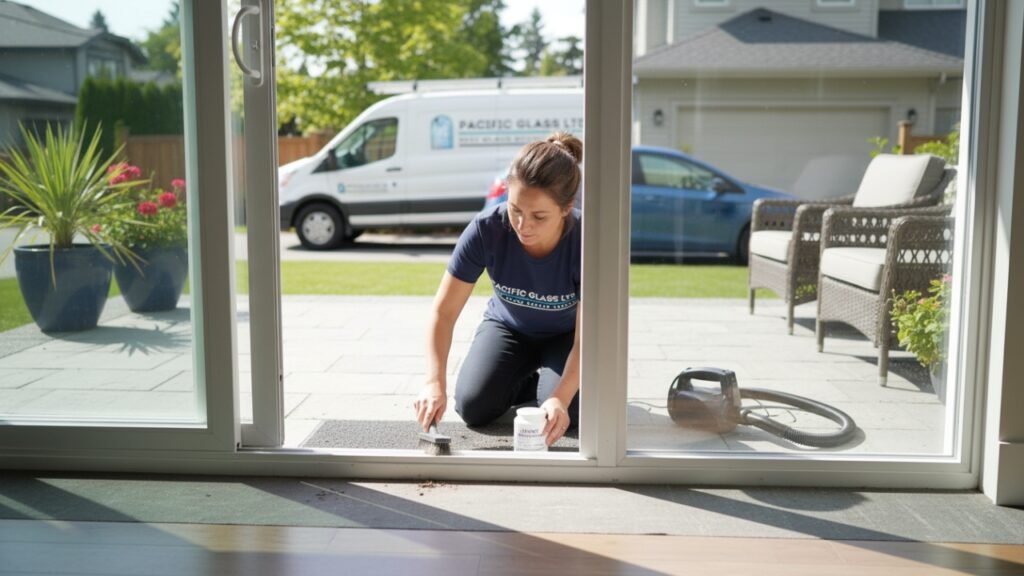
- Open the door fully and inspect the bottom track for dust, sand, leaves, pet fur, or small debris.
- Use a vacuum or a narrow brush to remove loose material.
- For stubborn grime, use a soft brush with a bit of soapy water, then wipe the track dry.
- If the door slides more smoothly after cleaning, the noise was likely caused by friction from debris.
If you notice rust, peeling paint, or a bent track, that may need professional repair or replacement from a glass and door service like Pacific Glass Ltd.
2. Lubricate the Track and Rollers
After cleaning, proper lubrication can remove squeaks and scraping noises.
- Use a silicone‑based spray lubricant (not WD‑40 as a long‑term solution).
- Spray a thin, even coat along the entire bottom track and directly on the rollers if they’re accessible.
- Wipe away any excess to avoid attracting dust.
- Open and close the door several times to distribute the lubricant.
If the door suddenly sounds rough again after a few days, there may be more damage to the track, rollers, or frame that needs professional attention.
3. Adjust or Replace the Rollers
Misaligned or worn rollers are a frequent cause of noise and stiffness.
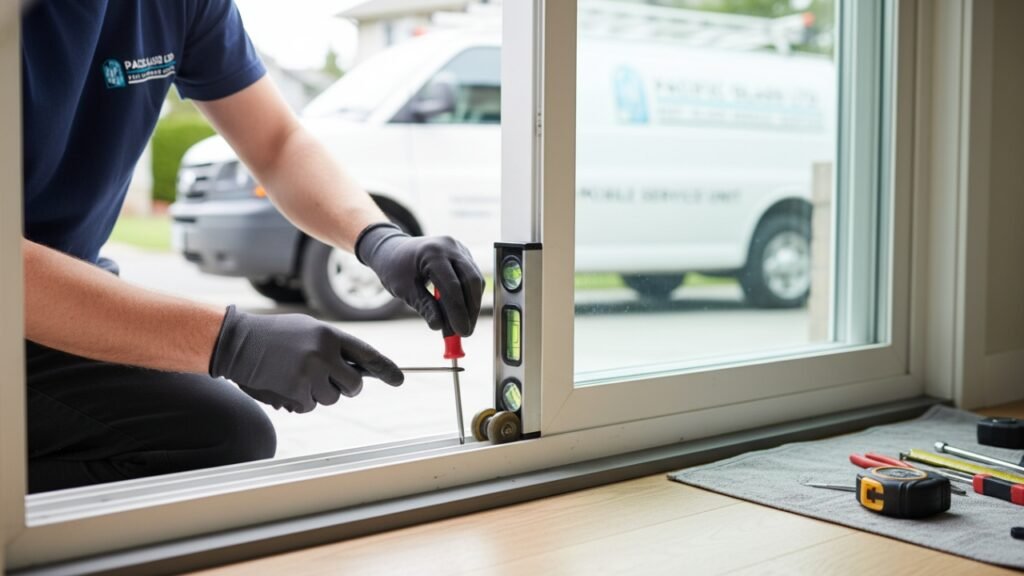
- Open the door halfway and look for adjustment screws on the bottom edge of the panel.
- Slightly raise or lower the rollers until the door sits level and glides smoothly.
- If the rollers are cracked, flattened, or wobbling, they should be replaced.
Heavy glass doors can be tricky to handle, so many homeowners in Vancouver choose to have a glass and door specialist handle roller replacement so everything is calibrated correctly.
4. Tighten Loose Hardware
Over time, screws in the frame, track, or handle can loosen, causing rattling or knocking noises.
- Check the door frame, threshold, and track for loose screws or brackets.
- Tighten them with the appropriate screwdriver or wrench.
- Avoid over‑tightening, which can strip threads or distort the frame.
If the frame itself looks warped or damaged, contact a professional glass and door company for assessment and repair.
5. Inspect the Glass and Frame for Damage
If the noise is coming from the glass itself or the door feels unsafe, this is not a DIY fix.
- Look for cracks, chips, or separation between the glass and the frame.
- Try to slide the door slowly and see if the noise is coming from the track, hardware, or the glass.
- If the glass is damaged or the frame feels loose, stop using the door and call a specialist right away.
For noisy doors where the source is hard to pinpoint, a trained team like Pacific Glass Ltd can inspect the door, test the glass, and recommend safe, long‑term fixes.
Frequently Asked Questions – Sliding Glass Door Makes Noise When Opening
Why does my sliding glass door squeak when I open it?

A squeaking sliding glass door is usually caused by a dry or dirty track, misaligned rollers, or insufficient lubrication. Cleaning the track and applying a thin coat of silicone‑based lubricant often stops the noise. If the squeak continues or you notice other issues, it may be time to check the rollers or the frame for damage.
Final Thoughts – Sliding Glass Door Makes Noise When Opening
If your sliding glass door makes noise when opening, start with cleaning the track, checking the rollers, and applying the right lubricant. In many cases, a few simple fixes will make the door quiet and smooth again. If the noise is strange, strong, or combined with visible damage or difficulty closing, stop using the door and call a glass and door professional like Pacific Glass Ltd for an inspection. Proper care now keeps your sliding glass door safer and quieter for years to come in your Vancouver home.
FAQs
If the door is still easy to open, the glass looks intact, and the noise is mostly squeaking or light scraping, it’s usually a maintenance issue. If the door feels like it’s jumping, catching, or rattling, or if the glass or frame is cracked or loose, the noise is more serious and should be checked by a professional.
You can safely lubricate the track and rollers yourself if the door is in good condition and you’re comfortable working with silicone‑based lubricant. If you’re unsure, the door is very stiff, or the glass or frame is damaged, it’s best to call a glass and door specialist for a safe inspection and repair.
For most homes, cleaning the track every 3–6 months and lubricating every 6–12 months helps keep doors quiet and smooth. If you live near the coast or in a dusty area, you may need to clean more often and lubricate at least twice a year to prevent noise and wear.
If cleaning and lubrication don’t stop the noise, the rollers may be misaligned, worn out, or damaged. The track could also be bent or rusted. In these cases, a professional glass and door service can inspect, adjust, or replace the problematic parts so your sliding glass door operates quietly and safely.
If the only issue is a light squeak or scraping and the glass and frame appear intact, it’s usually safe to keep using the door. However, don’t ignore persistent or worsening noise, stiffness, or any visible damage, as these can become safety hazards over time.

JAP Jabar is the highly skilled and experienced owner of Pacific Glass Ltd, a trusted leader in glass services throughout British Columbia, Canada. With over 15 years of experience in glass repair, installation, and design, JAP has built a strong reputation for excellence in providing top-tier glass solutions, including glass doors, windows, railings, balconies, and more. Whether it’s residential or commercial, JAP is committed to delivering quality and precision in every project. Pacific Glass Ltd offers a wide range of services, from sliding doors and swing doors to storefront glass, patio glass doors, mirror services, and shower glass installations, ensuring customers receive the best in durability, aesthetics, and functionality.
Pacific Glass Ltd serves clients across Burnaby, Vancouver, and greater British Columbia with a focus on offering high-end glass solutions that meet the unique needs of each space. JAP’s expertise spans multiple types of glass services, including glass & sealed unit replacement, windows repair, commercial doors, fixed walls, glass canopies, and more. As a locally owned and operated business, JAP’s commitment to excellence shines through in every project, earning him a reputation as one of the leading glass specialists in the area.