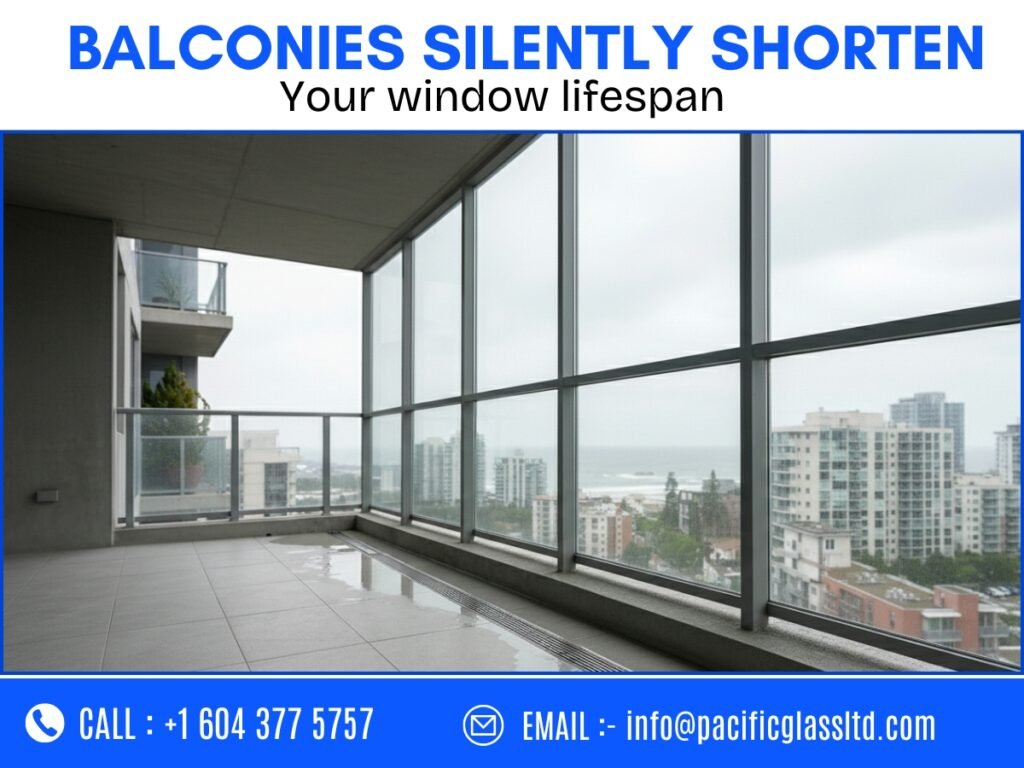
Balconies are one of the most attractive features of modern condos. They offer fresh air, outdoor space, and a connection to the surrounding environment. In cities like Burnaby and across coastal regions, balconies are considered a major lifestyle upgrade. But at Pacific Glass Ltd, we often see the other side of this design feature—one that many homeowners don’t recognize until problems appear.
Balcony exposure is one of the fastest ways windows age prematurely. Condos with balconies experience higher rates of window seal failure, fogging, drafts, and moisture-related damage than units without them. This doesn’t happen suddenly. It occurs gradually, as balconies amplify environmental stress on window systems day after day.
This blog explains why balcony exposure accelerates window failure, how it affects glass and seals over time, and what homeowners can do to protect their windows before small issues become expensive repairs.
How Balconies Change the Environment Around Windows
Windows without balconies are typically protected by:
- Roof overhangs
- Building setbacks
- Reduced wind pressure
Balcony windows, however, sit in a micro-environment that exposes them to harsher conditions. The balcony acts as a funnel for wind, moisture, and temperature fluctuations, concentrating stress directly onto the window system.
At Pacific Glass Ltd, we often explain that balcony windows don’t fail faster because they’re poorly made—but because they work harder every day.
Direct Moisture Exposure Is Constant
Balconies dramatically increase how often windows come into contact with moisture.
Sources include:
- Rain hitting balcony floors and walls
- Water splashing back toward windows
- Lingering damp surfaces after storms
- Condensation forming overnight
Unlike ground-level windows that dry quickly, balcony areas often remain damp longer—especially in shaded or north-facing units. This constant moisture pressure slowly weakens glass seals and frame joints.
Wind Pressure Is Stronger at Balcony Openings
Wind behaves differently around balconies. Instead of passing smoothly over a building’s surface, it:
- Hits balcony openings directly
- Circulates within the balcony enclosure
- Pushes repeatedly against window glass
Over time, this repeated pressure causes subtle movement in the window system. Glass seals are designed to flex slightly—but not endlessly. The more they flex, the faster they degrade.
Pacific Glass Ltd often sees seal failure first in high-rise balconies or corner units where wind exposure is strongest.
Temperature Swings Are More Extreme
Balcony windows experience sharper temperature changes than interior-facing windows.
During a single day:
- Morning shade keeps glass cold
- Afternoon sun heats the glass rapidly
- Evening temperatures drop again
This expansion and contraction cycle stresses sealants, spacers, and adhesives. Over years, these materials lose elasticity, crack microscopically, and allow air and moisture to enter the sealed glass unit.
Sun Exposure Accelerates Material Breakdown
Balconies often expose windows to prolonged direct sunlight. UV radiation plays a major role in window failure by:
- Drying out seal materials
- Breaking down chemical bonds
- Reducing flexibility of adhesives
Windows installed 15–25 years ago are especially vulnerable, as older seal technologies were not designed for long-term UV exposure combined with moisture and wind.
At Pacific Glass Ltd, we frequently see south- and west-facing balcony windows fail years earlier than other windows in the same unit.
Why Balcony Windows Fog First
Fogging between glass panes is one of the earliest visible signs of window failure. Balcony exposure accelerates this process because:
- Moisture penetrates weakened seals
- Insulating gas escapes faster
- Temperature differences trigger condensation
Unlike interior condensation, this fog cannot be wiped away. It lingers year-round and gradually worsens, reducing visibility and insulation.
Balcony windows are often the first windows in a condo to show fogging, even when others appear fine.
The Role of Building Movement
All buildings move slightly over time. In condos, this movement is magnified by:
- Wind sway
- Seasonal expansion and contraction
- Structural settling
Balconies add leverage to this movement. As the building shifts, balcony windows experience greater stress at their connection points. This accelerates seal fatigue and frame distortion.
Pacific Glass Ltd frequently finds that balcony-facing windows fail even when identical windows elsewhere in the unit remain intact.
Water Pooling and Drainage Issues
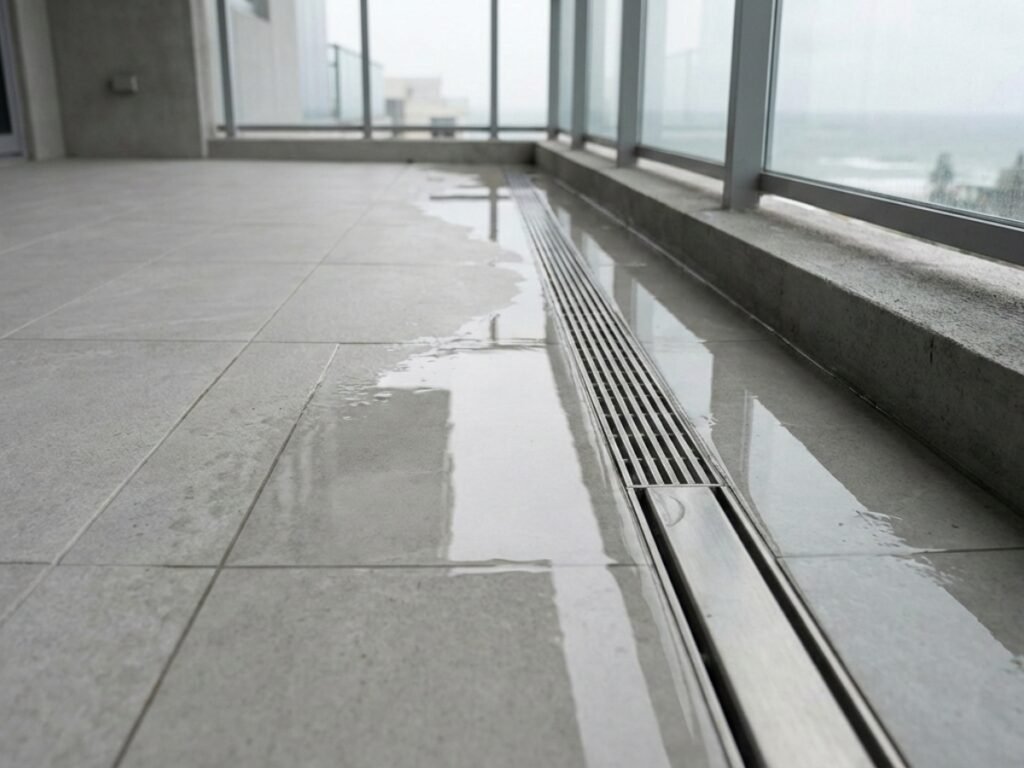
Balconies rely on proper drainage to prevent standing water. When drains clog or slope is imperfect:
- Water pools near window thresholds
- Moisture seeps into frame joints
- Seals remain saturated for extended periods
Even small drainage issues can dramatically shorten window lifespan. Persistent moisture at the base of a window is one of the fastest ways to compromise seal integrity.
How Balcony Exposure Affects Window Frames
Window failure isn’t limited to glass alone. Over time, balcony exposure affects frames by causing:
- Sealant shrinkage
- Frame swelling or warping
- Corrosion of metal components
- Loosening of fasteners
Once frame alignment shifts, glass seals are placed under uneven pressure, increasing the likelihood of failure.
Pacific Glass Ltd often addresses early frame issues during glass replacement to prevent future problems.
Why Condos Are More Affected Than Houses
Detached homes often have:
- Overhangs that protect windows
- Landscaping that blocks wind
- More balanced airflow
Condos with balconies lack these protective features. High elevation, exposed edges, and shared building envelopes amplify environmental stress, making balcony windows some of the most vulnerable components in any condo unit.
The Illusion of “Still Working” Balcony Windows
Many homeowners assume their windows are fine as long as:
- They open and close
- They aren’t visibly leaking
- There’s no obvious crack
In reality, balcony windows often fail internally first. Seal degradation can occur for years before fogging or drafts become obvious.
By the time symptoms appear, the window has already lost much of its insulating performance.
Energy Efficiency Loss Happens Quietly
Failed seals allow heat to escape in winter and enter in summer. Balcony windows often account for:
- Cold drafts near seating areas
- Hot zones near glass in summer
- Increased HVAC usage
Pacific Glass Ltd regularly replaces balcony glass for homeowners who notice rising energy bills but can’t pinpoint the cause.
Why DIY Fixes Don’t Solve Balcony Window Failure
Temporary fixes like:
- Caulking edges
- Defogging sprays
- Interior sealants
may hide symptoms briefly but do not restore seal integrity or insulation. In balcony-exposed windows, these fixes often trap moisture, accelerating damage.
Once seals fail, replacement is the only lasting solution.
Glass Replacement vs Full Window Replacement
Many balcony window failures can be resolved without replacing the entire window system.
Glass replacement:
- Restores insulation
- Removes fogging
- Preserves existing frames
- Meets most strata requirements
Pacific Glass Ltd specializes in targeted glass replacement, ideal for condo owners who want effective solutions without major renovations.
Modern Glass Performs Better in Balcony Conditions
New glass units are designed with:
- Improved seal materials
- Better UV resistance
- Enhanced moisture protection
Replacing failed balcony glass with modern sealed units significantly improves durability in exposed conditions.
Maintenance Habits That Slow Balcony Window Failure
While exposure can’t be eliminated, homeowners can reduce damage by:
- Keeping balcony drains clear
- Drying standing water after storms
- Monitoring condensation early
- Addressing fogging promptly
Early action makes a measurable difference in window lifespan.
How Pacific Glass Ltd Addresses Balcony Window Issues
At Pacific Glass Ltd, we:
- Identify exposure-related seal failure
- Inspect frame alignment
- Recommend glass-only replacement when possible
- Use climate-appropriate materials
Our goal is to extend window life while restoring comfort and clarity.
Final Thoughts
Balcony exposure doesn’t cause immediate failure—but it accelerates it quietly and consistently. Moisture, wind, sun, and temperature swings work together to weaken window seals long before problems become visible.
Understanding this process helps homeowners act early, avoid secondary damage, and choose the right solution.
At Pacific Glass Ltd, we help homeowners manage balcony-related window failure with precision, honesty, and long-term thinking—because windows exposed to the elements deserve solutions designed to last.
Clear windows aren’t accidental. They’re protected.
FAQs
Balcony windows face constant moisture, wind pressure, sunlight, and temperature changes, which accelerates seal breakdown compared to protected windows.
Yes. Balcony exposure increases moisture penetration, making fogging one of the earliest signs of sealed glass failure in condos.
In most cases, yes. Pacific Glass Ltd often replaces only the sealed glass unit, saving cost and avoiding major renovations.
In exposed condo environments, window seals often begin failing between 12–20 years, depending on exposure and maintenance.
Absolutely. New sealed glass restores insulation, reduces drafts, and helps stabilize indoor temperatures year-round.

JAP Jabar is the highly skilled and experienced owner of Pacific Glass Ltd, a trusted leader in glass services throughout British Columbia, Canada. With over 15 years of experience in glass repair, installation, and design, JAP has built a strong reputation for excellence in providing top-tier glass solutions, including glass doors, windows, railings, balconies, and more. Whether it’s residential or commercial, JAP is committed to delivering quality and precision in every project. Pacific Glass Ltd offers a wide range of services, from sliding doors and swing doors to storefront glass, patio glass doors, mirror services, and shower glass installations, ensuring customers receive the best in durability, aesthetics, and functionality.
Pacific Glass Ltd serves clients across Burnaby, Vancouver, and greater British Columbia with a focus on offering high-end glass solutions that meet the unique needs of each space. JAP’s expertise spans multiple types of glass services, including glass & sealed unit replacement, windows repair, commercial doors, fixed walls, glass canopies, and more. As a locally owned and operated business, JAP’s commitment to excellence shines through in every project, earning him a reputation as one of the leading glass specialists in the area.