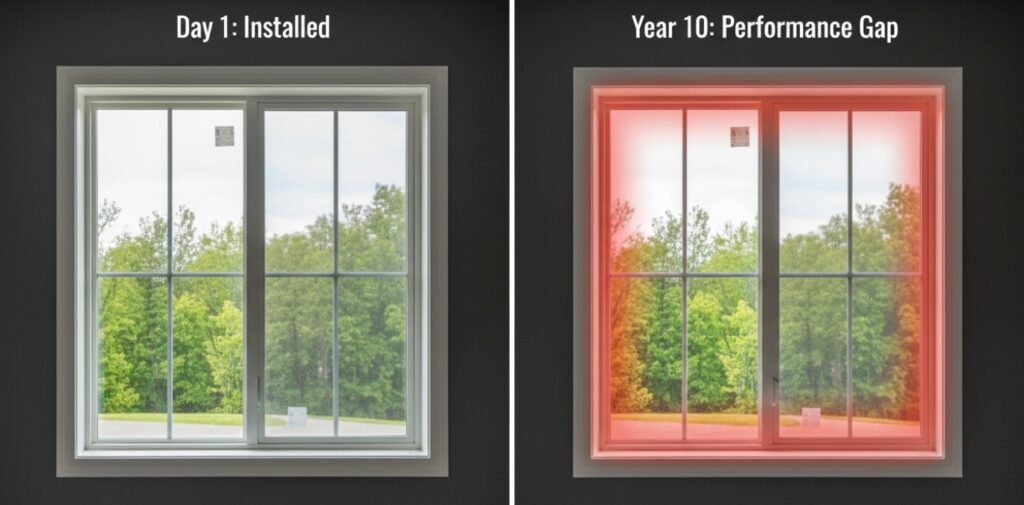
Most homeowners believe windows have only two states.
Installed.
Broken.
If a window is installed properly and nothing looks wrong, it must be working — right?
Not exactly.
At Pacific Glass Ltd, one of the most common misunderstandings we encounter is the belief that a window’s job is finished the day it’s installed. In reality, installation is only the beginning of a much longer story. What matters far more over time is whether that window is still working — quietly, efficiently, and invisibly — the way it was designed to.
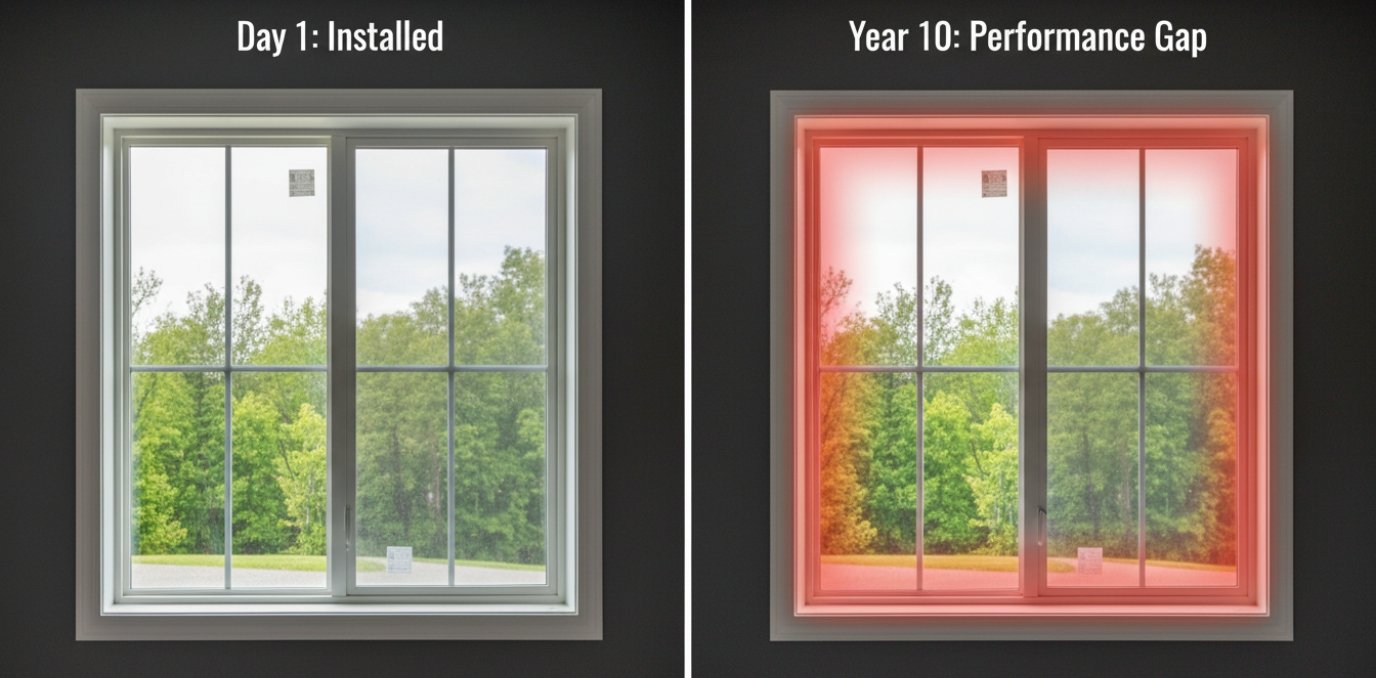
Between those two ideas lies a growing, often unnoticed space: the performance gap.
Installed Is a Moment. Working Is a Condition.
Installation happens once.
Performance happens every day.
A window can be perfectly installed and still lose its ability to:
- retain heat
- block noise
- regulate indoor comfort
- protect energy efficiency
The problem is that most of this loss happens silently. Nothing shatters. Nothing cracks. Nothing demands immediate attention.
And so homeowners assume everything is fine.
Why This Gap Exists in the First Place
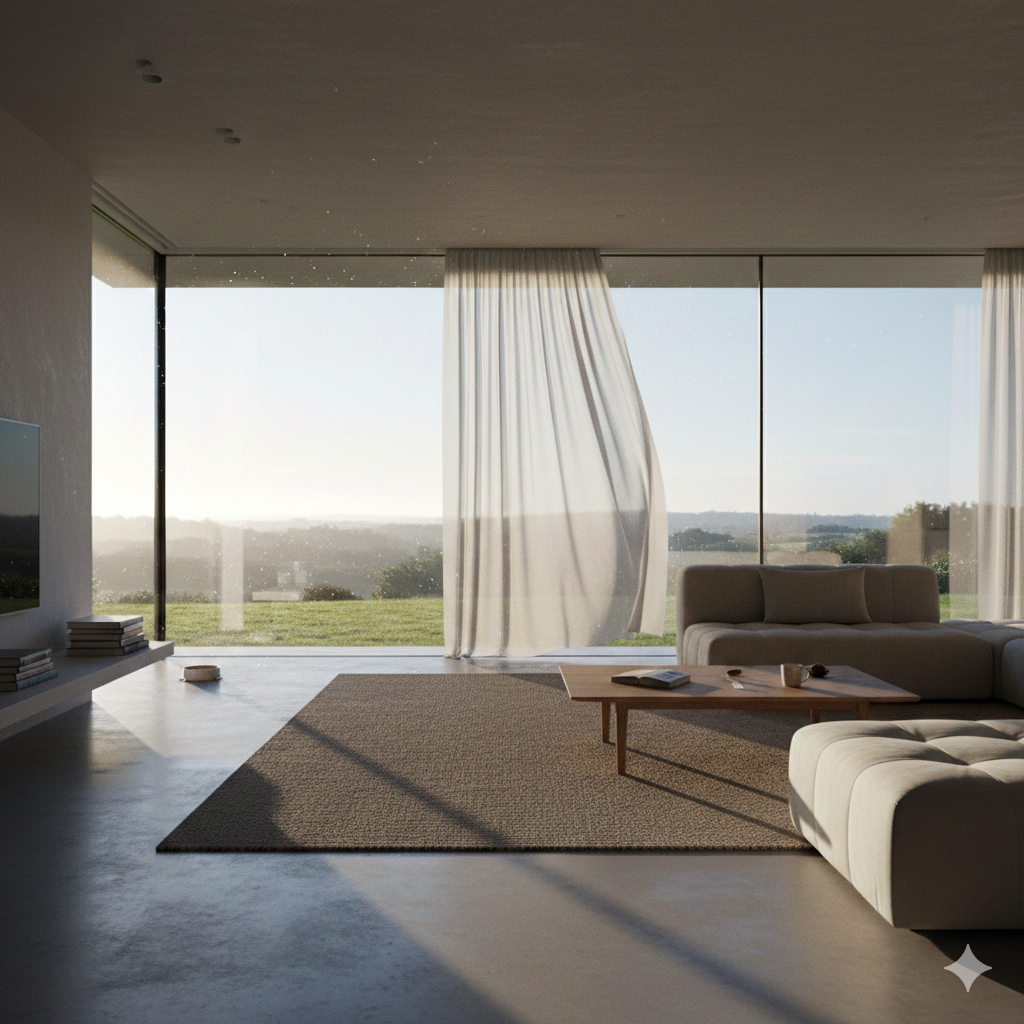
Modern windows are complex systems. They rely on more than just glass and frames. Inside every double- or triple-pane window is a carefully controlled environment made up of:
- sealed air or gas spaces
- edge seals designed to flex, not fail
- coatings that manage solar heat
- pressure balance between panes
These components don’t stop aging once installation is complete.
They begin aging immediately.
Temperature changes, sunlight exposure, seasonal expansion, and even normal building movement slowly stress the system. The window may still exist, but its ability to perform begins to change.
That’s the gap most homeowners never think about.
Why the Performance Gap Is Hard to Detect
The most misleading thing about windows is how long they look “fine.”
Glass stays clear.
Frames stay intact.
Locks still work.
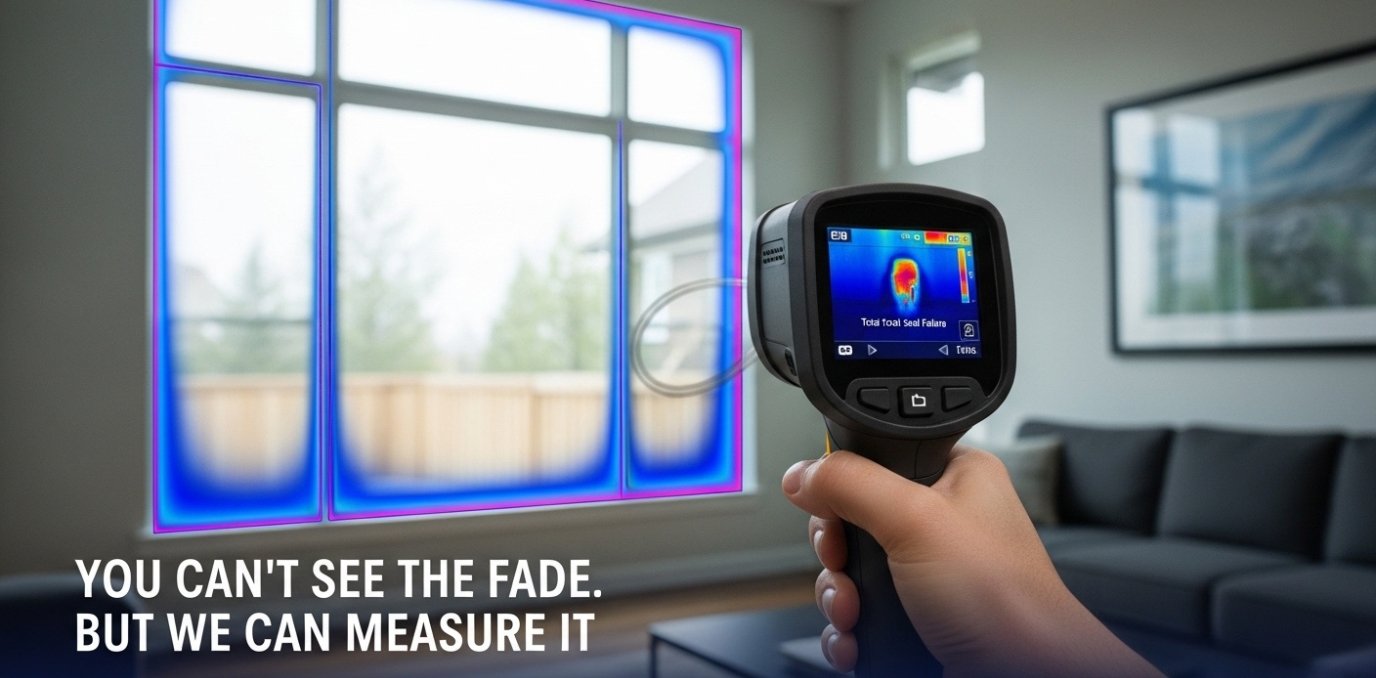
But performance loss doesn’t announce itself visually.
Instead, it shows up as subtle shifts:
- rooms cooling faster than they used to
- heating systems cycling more often
- outside sounds feeling closer
- certain areas becoming less comfortable
Because these changes happen gradually, they’re easy to normalize. Homeowners adjust behavior rather than question the window.
This is why the performance gap grows unnoticed for years.
Clear Glass Does Not Equal Working Glass
One of the biggest myths Pacific Glass Ltd encounters is the idea that clear glass means healthy windows.
Clarity only tells you one thing: moisture hasn’t become visible yet.
It tells you nothing about:
- insulation quality
- gas retention
- sound control
- thermal consistency
By the time fogging appears, the performance gap has already widened significantly. Fog is not the start of failure — it’s the moment failure becomes visible.
The Early Years: When Performance Begins to Drift
In the first several years after installation, performance loss is minimal but measurable.
Seals begin to relax.
Gas retention slowly declines.
Thermal resistance becomes slightly less effective.
Most homeowners never notice this phase. Comfort is still acceptable. Energy costs rise slowly enough to be blamed on utilities or weather.
But this is when the gap begins.
The window is installed — but it’s already working a little less than before.
The Middle Years: Where the Gap Widens
As windows move deeper into their lifespan, performance loss compounds.
This is when homeowners start compensating without realizing it:
- closing curtains more often
- avoiding sitting near windows
- turning thermostats up or down slightly more
- accepting uneven room temperatures
The home still functions, but it doesn’t feel as effortless.
This is also when many homeowners mistake symptoms for unrelated problems — blaming insulation, HVAC systems, or even the house itself.
Rarely do they suspect the windows.
Why Failure Feels Sudden (But Isn’t)
When fogging finally appears or drafts become noticeable, homeowners often describe it as sudden failure.
“It was fine, and then it wasn’t.”
But in reality, the window didn’t fail overnight. It crossed a threshold. The performance gap had been widening quietly for years, and it finally reached a point where it could no longer hide.
This is why window issues feel unexpected — even though they aren’t.
Sound Loss: The Earliest Warning Most People Miss
Temperature changes get blamed on weather. Energy costs get blamed on rates.
Sound is harder to explain away.
Many homeowners first sense the performance gap when their home feels noisier than it used to. Traffic, neighbors, wind — all seem closer.
Sound insulation depends heavily on airtight seals and consistent internal spacing. As those degrade, sound escapes first.
At Pacific Glass Ltd, we often hear:
“I don’t remember it being this loud.”
That memory is usually correct.
Why Waiting Costs More Than Acting Early
Because the performance gap doesn’t feel urgent, it often gets ignored.
But every year of inaction increases:
- energy loss
- HVAC strain
- comfort imbalance
- long-term costs
The longer the gap is allowed to widen, the fewer options homeowners have. What could have been a targeted glass solution may eventually require more extensive intervention.
Early understanding saves money. Late reaction spends it.
Frames vs. Glass: What Actually Stops Working
Another misconception is that when windows stop performing, everything must be replaced.
In many homes, frames remain structurally sound long after glass units lose efficiency. The system fails from the inside out.
This is why professional evaluation matters.
At Pacific Glass Ltd, we focus on identifying where performance is being lost — not defaulting to full replacement when it isn’t necessary.
Why Homeowners Overestimate Window Lifespan
People often quote a 20–30 year lifespan for windows.
That number usually refers to structural survival, not performance.
A window can physically exist for decades while delivering only a fraction of its original comfort and efficiency.
Installed longevity and working longevity are not the same thing.
A Better Way to Judge Window Health
Instead of asking:
“Are my windows broken?”
Ask:
- Do rooms hold temperature evenly?
- Has outside noise increased?
- Are energy costs rising without explanation?
- Does comfort require more effort than before?
These questions reveal performance — not appearance.
How Pacific Glass Ltd Helps Close the Gap
At Pacific Glass Ltd, we don’t treat windows as binary.
We evaluate:
- how they’re performing now
- how far performance has drifted
- what solutions make sense at this stage
Sometimes that means glass replacement. Sometimes it means targeted upgrades. Sometimes it means reassurance that performance is still solid.
Our goal is not to sell fear — it’s to restore function.
Why This Gap Matters More Than Ever
Homes today are expected to do more:
- manage energy efficiently
- provide quiet spaces
- adapt to changing climates
- support comfort year-round
Windows play a central role in all of this.
When the performance gap widens, the entire home feels the impact — even if no one can immediately name the cause.
Closing the Gap Before It Becomes a Problem
The smartest homeowners don’t wait for visible failure.
They pay attention to subtle shifts.
They ask better questions.
They treat windows as systems — not fixtures frozen in time.
Because the difference between installed and working isn’t academic.
It’s the difference between a home that quietly supports comfort and one that slowly works against it.
Final Thoughts
Windows don’t stop working the day they’re installed.
They stop working the day performance loss becomes impossible to ignore.
Understanding the gap between those two moments is how homeowners stay comfortable, efficient, and in control — instead of reacting late.
Pacific Glass Ltd helps homeowners recognize that gap early, close it wisely, and restore what windows are meant to do: protect comfort without demanding attention.
FAQs
It’s the difference between a window being installed and its ability to still perform efficiently over time.
Yes. Seal weakening and insulation loss often occur while glass remains clear.
Because thermal and sound insulation decline gradually due to aging seals and materials.
No. Fog appears late, after performance loss has already occurred.
In many cases, Pacific Glass Ltd restores comfort by replacing only the glass units.

JAP Jabar is the highly skilled and experienced owner of Pacific Glass Ltd, a trusted leader in glass services throughout British Columbia, Canada. With over 15 years of experience in glass repair, installation, and design, JAP has built a strong reputation for excellence in providing top-tier glass solutions, including glass doors, windows, railings, balconies, and more. Whether it’s residential or commercial, JAP is committed to delivering quality and precision in every project. Pacific Glass Ltd offers a wide range of services, from sliding doors and swing doors to storefront glass, patio glass doors, mirror services, and shower glass installations, ensuring customers receive the best in durability, aesthetics, and functionality.
Pacific Glass Ltd serves clients across Burnaby, Vancouver, and greater British Columbia with a focus on offering high-end glass solutions that meet the unique needs of each space. JAP’s expertise spans multiple types of glass services, including glass & sealed unit replacement, windows repair, commercial doors, fixed walls, glass canopies, and more. As a locally owned and operated business, JAP’s commitment to excellence shines through in every project, earning him a reputation as one of the leading glass specialists in the area.