There is a strange kind of silence that lives inside every window.
It’s not the silence of a quiet room or a still morning.
It’s a working silence — the kind that holds back wind, filters daylight, resists moisture, and keeps comfort tucked gently inside your home.
And yet, this silence isn’t immortal.
Windows don’t fail loudly.
They don’t crack with a dramatic shatter or collapse like something out of a disaster movie.
Instead…
They fade.
Quietly.
Slowly.
Softly.
And most homeowners never notice that fade happening — until the home begins to feel different in a way they can’t explain.
This is the story of that invisible fade — and how Pacific Glass & Window helps homeowners understand the truth behind what their glass is trying desperately to endure.
Comfort Changes Before Windows Do
A window rarely announces its weaknesses with a visible sign.
No red lights.
No alarms.
No “Fix me!” written on the glass.
Instead, it behaves like this:
- That one room feels oddly colder in the mornings.
- The air feels slightly heavier, but you can’t say why.
- The light entering the home feels duller than last year.
- Your heater runs longer even though the temperature hasn’t changed.
You shrug.
You assume it’s the season.
You assume it’s age.
You assume it’s imagination.
But the window knows better.
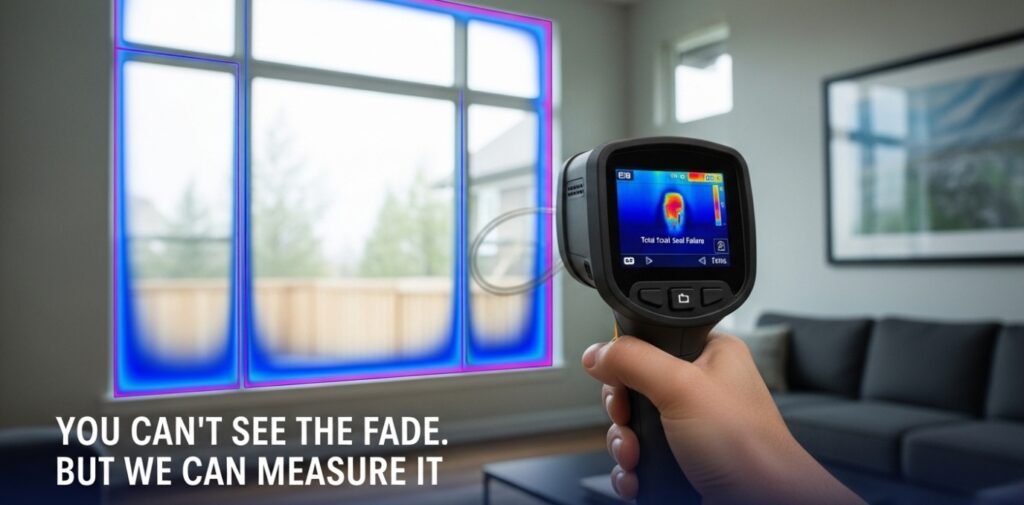
Inside the frame, something subtle is happening — a quiet fade. Not enough to break, not enough to show, but enough to shift the comfort of your home in ways you feel before you understand.
The Invisible Weakening Nobody Talks About
Here’s the strangest truth:
A window can look perfectly healthy while silently losing its strength.
Think of it like a book whose pages are fading from the inside out — the cover looks untouched, but the story is disappearing.
Windows behave the same way.
Most of their weakness develops inside:
- 🟦 Tiny gas leaks you can’t see
- 🟦 Shifts in pressure between panes
- 🟦 Moisture molecules sneaking into sealed spaces
- 🟦 Frames expanding and contracting until alignment slips
- 🟦 Soundproofing fading a decibel at a time
None of this announces itself.
None of this leaves evidence.
But your comfort knows.
Your energy bills know.
Your daily temperature experience knows.
And Pacific Glass & Window has seen this “quiet fade” more times than homeowners can imagine.
When Rooms Start Telling Different Stories
Every room with a failing window begins narrating a slightly different story:
➡️ “This room takes longer to heat.”
➡️ “This corner feels drafty.”
➡️ “This window looks fine… but why does the glass feel colder?”
➡️ “The morning sun here used to feel warmer.”
Windows don’t weaken evenly.
They fade at different speeds depending on:
- How much sun they receive
- How much wind pressure hits them
- How moisture settles near the seals
- How the home was built around them
- How often the house shifts subtly over the years
This is why homeowners often feel something is wrong before they ever see something wrong.
The window’s body stays intact, but its performance leaks away.
Just like a person who appears healthy but feels tired inside.
A Table to Make the Invisible Visible
Here is a creative table showing how windows fade without leaving evidence:
| What You See | What’s Actually Happening | Comfort Effect |
| Glass looks clear | Gas layer between panes thinning | Rooms lose insulation |
| No cracks or chips | Seal losing pressure microscopically | Heat escapes quietly |
| Frame looks normal | Expansion from seasonal shifts | Drafts form slowly |
| No condensation | Moisture molecules entering over time | Humidity feels “heavier” |
| Light still enters | Glass clarity aging gradually | Brightness feels weaker |
| Window operates fine | Internal structure weakening | Sound travels more easily |
The fade is subtle.
The evidence is invisible.
And homeowners are left confused — until Pacific Glass & Window points out the truth.
Why the Quiet Fade Happens
Humans think windows fail in dramatic ways because that’s what they see in movies.
But in real life?
Failure is slow.
Windows fade like memories:
- Not gone, but not the same.
- Not broken, but not strong.
- Not obvious, but definitely noticeable.
This fade happens because glass and seals age differently than wood or metal.
Glass is rigid.
Frames are flexible.
Moisture is persistent.
Temperature never stops changing.
Every day, windows fight:
- Pressure
- UV exposure
- Moisture
- Vibration
- Seasonal swings
And every day, they sacrifice a little bit of themselves to keep your comfort stable.
Eventually, those sacrifices add up — and the drop in performance becomes obvious.
But only Pacific Glass LTD knows how to decode the clues before they become expensive problems.
The Homeowner Experience Nobody Names
Let’s paint a picture:
You sit in your living room.
You’ve lived in your home for years.
Everything looks the same — furniture, paints, décor, windows.
But something feels different.
You can’t name it.
You can’t point to it.
You can’t see the problem.
But you know it’s there.
That slight discomfort — the one you keep ignoring — is actually the first whisper of window fade.
Windows don’t shout their decline.
They whisper it.
And most homeowners aren’t trained to hear those whispers.
Pacific Glass & Window is.
Symbols That Show “The Quiet Fade” Creatively
Here is a symbolic breakdown of how windows fade:
- 🌫️ = Clarity dulling over time
- 💧 = Moisture slowly entering the seal
- 🌬️ = Micro-drafts forming invisibly
- ♻️ = Temperature cycling wearing down materials
- 🔇 = Soundproofing weakening little by little
- 🔥 = Energy efficiency fading quietly
And together they create:
🌫️💧🌬️♻️🔇🔥 = The Quiet Fade
Why Most Homeowners Don’t Notice
Because the decline happens in such small fractions:
- 1% insulation loss in year one
- 2% in year two
- 3% in year three
- 5% in year four
By year 10–12, you’ve lost 20–30% performance, but it happened so gradually, your brain adjusted to every stage.
You didn’t notice the slow change because humans adapt.
But the home adapted in ways that reduced your comfort — and your wallet paid the price.
How Pacific Glass LTD Helps Reverse the Quiet Fade
Your windows may be quiet,
but Pacific Glass LTD is the one company that listens.
We know:
- where the seals fail first
- how glass ages silently
- why comfort shifts before symptoms appear
- what a window sounds like when it begins to struggle
- how sunlight reveals hidden weaknesses
- how to restore performance before it disappears completely
Homeowners don’t need to understand the science — that’s our job.
You only need to know this:A home always feels better
when its windows stop fading
and start performing again.
FAQs
Slow seal weakening, gas loss, moisture intrusion, and micro-fractures begin long before visible symptoms appear.
Look for tiny distortions, uneven temperature on the glass, faint hazing, or hollow tapping sound.
No—fog is a late-stage symptom. The quiet fade usually begins months or years before fogging.
Yes. Pacific Glass LTD can restore seals, refill gas, and stabilize frames when caught early.
Regular inspections, early treatment, and proper seal maintenance keep windows strong for years.