
Windows don’t usually fail with a bang.
There’s no loud crack. No dramatic leak. No sudden moment when a homeowner says, “That’s it—my windows are done.”
Instead, windows decline quietly.
At Pacific Glass Ltd, we often meet homeowners who say, “They were fine last year,” even though the signs of decline have been building for a decade. The truth is, most window problems develop invisibly, long before fogging, drafts, or obvious discomfort appear.
These unnoticed years—the invisible years of window decline—are where performance is lost, comfort slowly fades, and efficiency quietly slips away.
This blog explores what happens during those hidden years, why homeowners rarely recognize it, and how understanding this slow decline can change the way people care for their homes.
Why Window Decline Is Hard to Detect
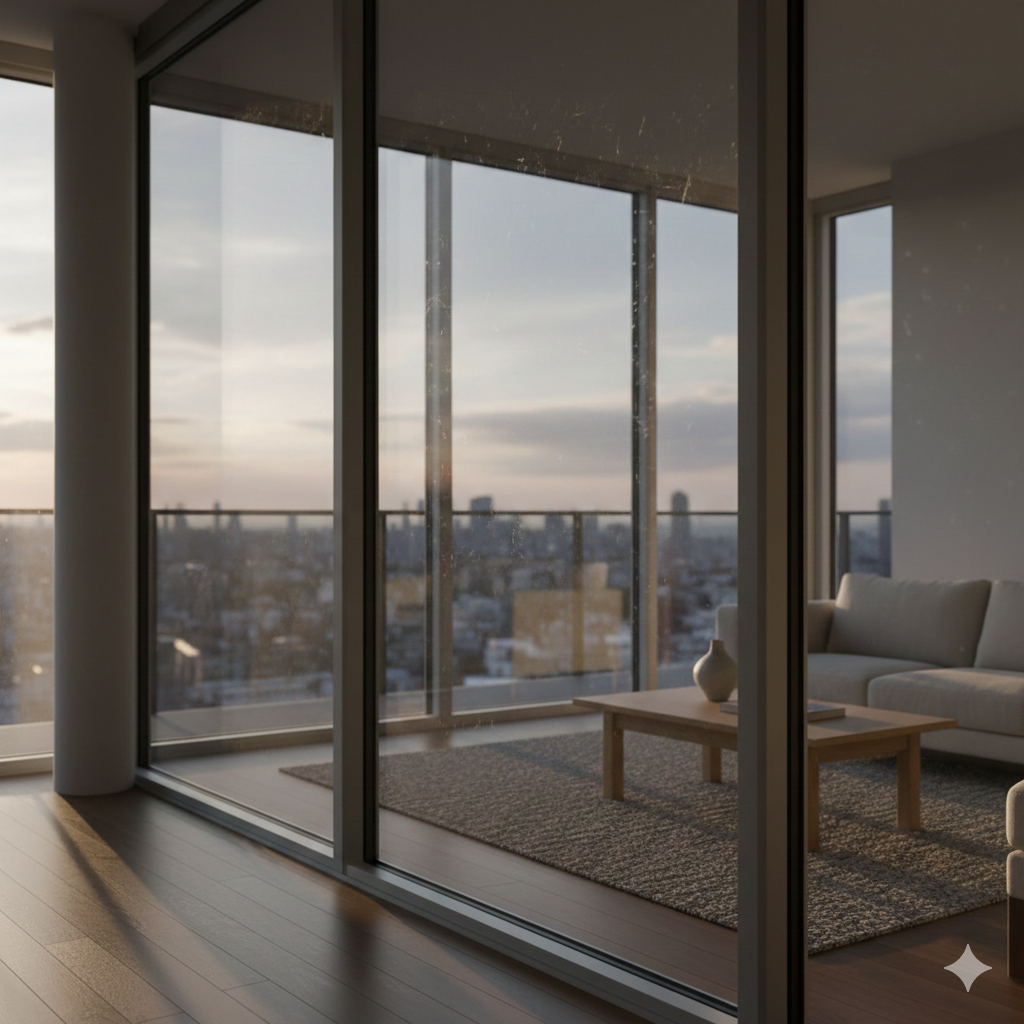
Unlike appliances or mechanical systems, windows don’t have:
- Warning lights
- Error messages
- Maintenance alerts
They simply exist—until they don’t work as expected.
Most people judge windows by three visible factors:
- Are they cracked?
- Do they open?
- Can I see through them?
But these checks ignore what matters most: performance happening inside the glass.
Window decline usually begins in places homeowners can’t see.
What Modern Windows Are Actually Made Of
To understand invisible decline, it helps to understand how modern windows work.
Most windows today use insulated glass units (IGUs), made of:
- Two or more panes of glass
- Spacer bars separating the panes
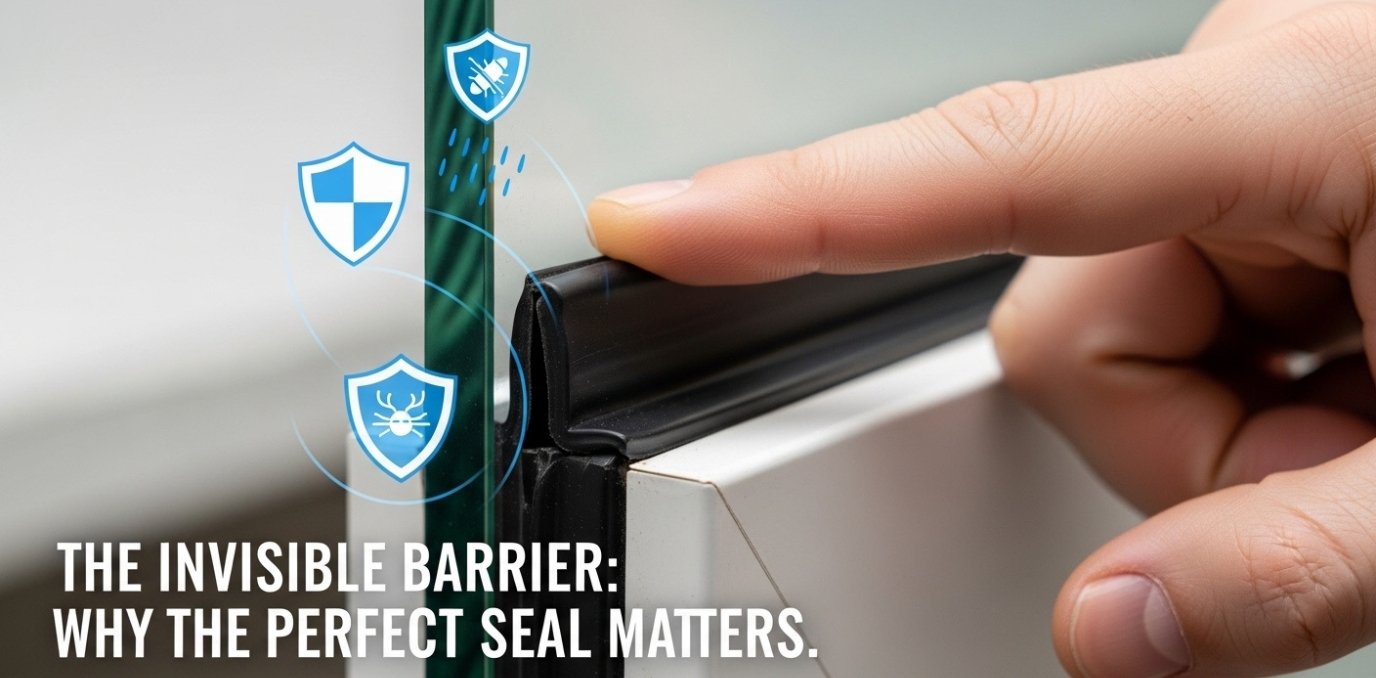
- Seals that lock everything together
- Insulating gas trapped inside
These components work together to:
- Control temperature
- Block moisture
- Reduce noise
- Improve energy efficiency
The glass itself often stays intact for decades. The seals and internal systems do not.
The Slow Fatigue of Window Seals
Window seals are designed to be flexible—not permanent.
Every day, they experience:
- Expansion when temperatures rise
- Contraction when temperatures fall
- Pressure from wind
- Stress from building movement
Over years, this constant motion causes:
- Loss of elasticity
- Microscopic gaps
- Reduced gas retention
This process happens gradually, quietly, and invisibly.
By the time a seal fully fails, it has often been weakening for many years.
Why Nothing Feels “Wrong” at First
One of the reasons window decline goes unnoticed is adaptability.
Homeowners subconsciously adjust:
- Sitting farther from windows in winter
- Closing blinds more often in summer
- Increasing heating or cooling slightly
These small changes feel normal. The home still functions—just less efficiently.
At Pacific Glass Ltd, we often explain that comfort loss is gradual, not sudden. By the time discomfort is obvious, decline is well underway.
The Disappearing Insulation Effect
When window seals weaken, insulating gas slowly escapes.
This doesn’t cause immediate problems. Instead:
- Heat transfer increases bit by bit
- Indoor temperatures fluctuate more
- Exterior cold and heat penetrate faster
The window still looks clear. It still opens. But its insulating value is quietly shrinking.
Energy loss begins long before visible damage appears.
The Myth of “If It’s Clear, It’s Fine”
Clear glass can be misleading.
Many failing windows:
- Show no fog
- Have no visible moisture
- Appear perfectly intact
Fogging only occurs when moisture finally accumulates between panes. By then:
- The insulating gas is already gone
- Performance has already declined
- The window has been underperforming for years
Fogging is not the start of decline—it’s the confirmation that decline has already happened.
How Climate Accelerates Invisible Decline
Environmental exposure plays a huge role in how quickly windows age.
In coastal and urban regions, windows face:
- Persistent moisture
- Frequent rain
- UV radiation
- Wind pressure
Balcony-facing and high-rise windows are especially vulnerable.
At Pacific Glass Ltd, we often see windows in the same home aging at different speeds simply due to exposure differences.
The Quiet Impact on Energy Bills
Rising energy costs are often blamed on:
- Weather changes
- Utility rate increases
- Aging HVAC systems
Windows are rarely suspected.
But declining window performance causes:
- Heat loss in winter
- Heat gain in summer
- Longer HVAC run times
Because the change is gradual, homeowners don’t connect it to their windows.
The invisible years quietly cost money.
Light Loss Happens Too
Window decline doesn’t only affect temperature—it affects light.
As seals weaken and coatings age:
- Light transmission subtly decreases
- Views appear less crisp
- Rooms feel dimmer, even on bright days
Homeowners often repaint, add lighting, or rearrange furniture—never realizing the glass itself is part of the problem.
Noise Creeps In Slowly
Sound insulation is another casualty of invisible decline.
As internal seals weaken:
- Outside noise penetrates more easily
- Urban sounds feel closer
- Interior spaces lose quietness
This happens gradually, making it hard to notice until the contrast becomes obvious—often after glass replacement.
Why Older Buildings Hide Decline Better
In condos and older buildings, window decline is harder to spot because:
- Changes are shared across units
- Everyone adapts at the same pace
- There’s no “before and after” comparison
This creates a false sense of normalcy.
At Pacific Glass Ltd, many condo owners only realize how much comfort they’ve lost after upgrading just one window or room.
The Psychological Side of Invisible Decline
There’s a mental component to this problem.
Humans are wired to respond to sudden changes, not slow ones. When decline happens over 10–15 years, it feels like:
“This is just how the home is.”
That belief keeps people from asking the right questions.
Why Maintenance Doesn’t Stop the Clock
Cleaning and basic maintenance help—but they don’t stop internal aging.
You can:
- Clean glass perfectly
- Maintain frames
- Replace weatherstripping
And still experience internal seal decline.
The most important parts of modern windows are sealed inside—and inaccessible.
When the Invisible Becomes Visible
Eventually, signs appear:
- Fogging between panes
- Persistent drafts
- Cold or hot zones near windows
- Condensation that never fully dries
At this point, homeowners believe the problem just started.
In reality, it started years ago.
Why Waiting Costs More
The longer decline goes unaddressed:
- The worse performance becomes
- The more stress frames endure
- The greater the comfort loss
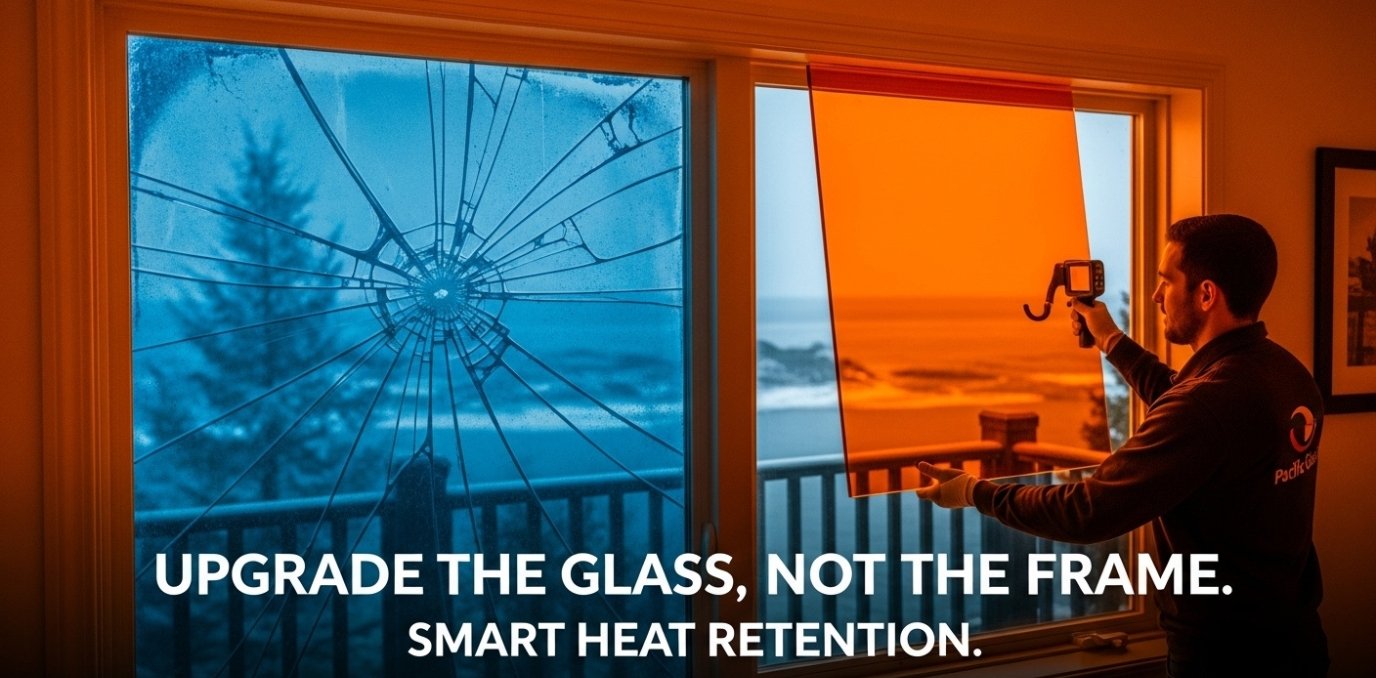
Early intervention often allows for glass-only replacement, preserving frames and reducing cost.
Pacific Glass Ltd frequently helps homeowners upgrade glass before full window replacement becomes necessary.
Seeing the Difference After Replacement
One of the most striking moments for homeowners is after replacement.
They notice:
- Brighter rooms
- Quieter interiors
- More stable temperatures
- Clearer views
And the most common reaction:
“I didn’t realize how bad it had gotten.”
That realization defines the invisible years.
Why Age Isn’t the Right Measurement
Windows don’t age by calendar years.
They age by:
- Exposure
- Stress
- Climate
- Usage
Two windows installed on the same day can perform very differently 15 years later.
Understanding this shifts the focus from “How old are my windows?” to “How are they performing now?”
How Pacific Glass Ltd Helps Reveal the Invisible
At Pacific Glass Ltd, our role isn’t just replacing glass—it’s helping homeowners understand what they can’t see.
We:
- Identify early performance decline
- Assess exposure-related stress
- Recommend targeted solutions
- Help clients act before visible failure
Our approach is about clarity—literal and informed.
Breaking the Cycle of Delay
Most homeowners delay action because:
- Nothing looks broken
- Problems feel manageable
- Replacement feels unnecessary
Understanding invisible decline changes that mindset.
It replaces delay with intention.
A Better Way to Think About Windows
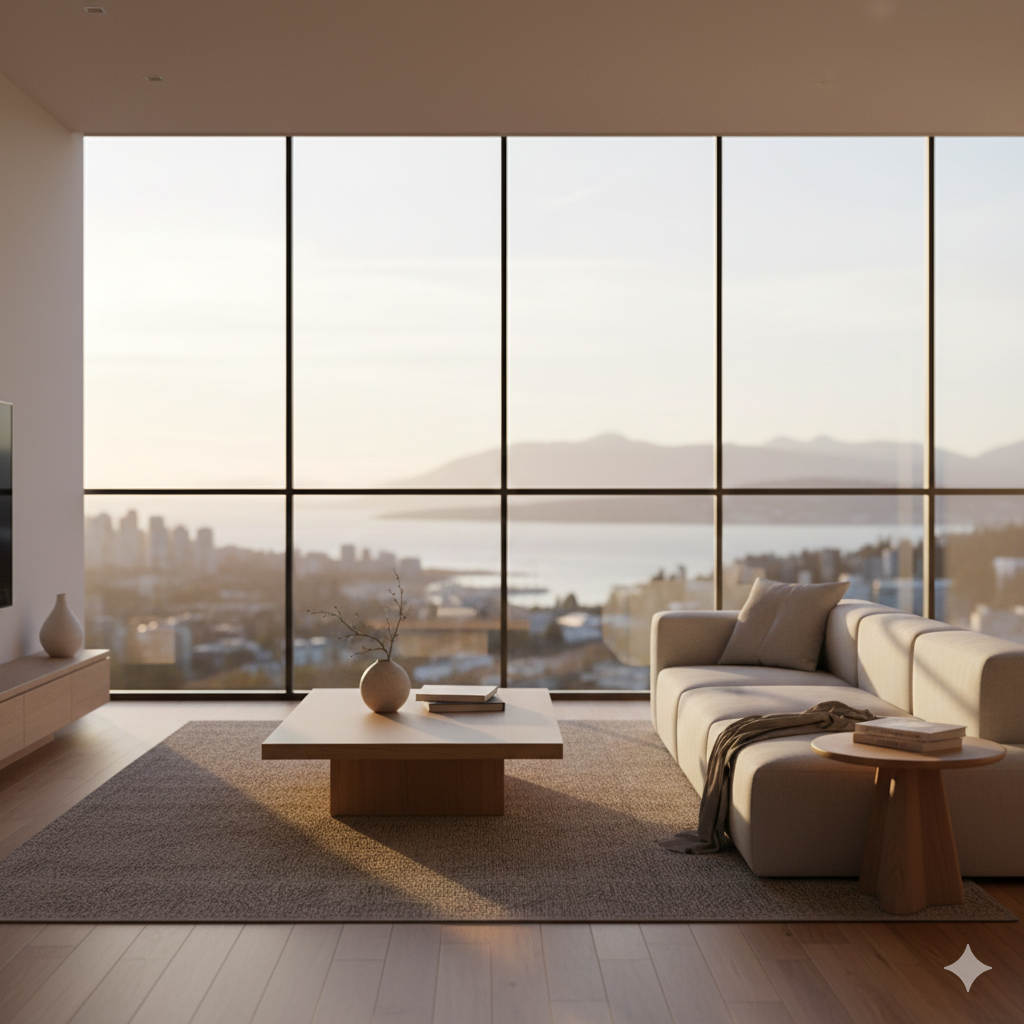
Windows shouldn’t be judged by appearance alone.
They should be evaluated by:
- Comfort
- Efficiency
- Light quality
- Noise control
These factors tell the real story—long before visible failure.
Final Thoughts
Window decline is not dramatic. It’s quiet, gradual, and easy to miss.
But awareness can be sudden.
Once homeowners understand the invisible years, they stop waiting for obvious problems—and start making smarter decisions earlier.
At Pacific Glass Ltd, we believe the most powerful upgrade isn’t just new glass—it’s seeing clearly what’s been happening all along.
Because windows don’t fail overnight.
They fade quietly—until someone finally notices.
FAQs
Invisible window decline refers to the gradual loss of window performance caused by seal fatigue, gas loss, and moisture intrusion before visible signs appear.
Most homeowners don’t notice decline for 10–15 years because changes in comfort and efficiency happen slowly over time.
Windows almost always fail gradually. Fogging and drafts usually appear after years of internal performance loss.
Yes. Windows can appear clear and functional while insulation, sound control, and energy efficiency have already declined.
Addressing decline early allows for glass-only replacement, restoring performance before full window replacement becomes necessary.

JAP Jabar is the highly skilled and experienced owner of Pacific Glass Ltd, a trusted leader in glass services throughout British Columbia, Canada. With over 15 years of experience in glass repair, installation, and design, JAP has built a strong reputation for excellence in providing top-tier glass solutions, including glass doors, windows, railings, balconies, and more. Whether it’s residential or commercial, JAP is committed to delivering quality and precision in every project. Pacific Glass Ltd offers a wide range of services, from sliding doors and swing doors to storefront glass, patio glass doors, mirror services, and shower glass installations, ensuring customers receive the best in durability, aesthetics, and functionality.
Pacific Glass Ltd serves clients across Burnaby, Vancouver, and greater British Columbia with a focus on offering high-end glass solutions that meet the unique needs of each space. JAP’s expertise spans multiple types of glass services, including glass & sealed unit replacement, windows repair, commercial doors, fixed walls, glass canopies, and more. As a locally owned and operated business, JAP’s commitment to excellence shines through in every project, earning him a reputation as one of the leading glass specialists in the area.