Your windows know you better than you think.
They’ve watched every season pass across your home like chapters in a quiet autobiography—winter pressures, summer expansions, fall moisture swings, and spring’s sudden light shifts. They’ve endured the temperature tantrums and the humidity surprises. They’ve lived through everything you’ve lived through—silently, faithfully, and often invisibly.
But here’s the truth most homeowners never realize:
Glass remembers.
Not the way people remember birthdays or favorite meals—
but in the way materials store stress, temperature, pressure, and time deep inside their structure.
It’s not magic.
It’s not myth.
It’s the physics of survival.
And it’s happening in your home every hour of every season.
Memory #1 — Winter: The Squeeze That Never Ends
Winter is the season that presses itself into windows the hardest.
When Burnaby nights drop, your double-pane glass shrinks microscopically. The seals tighten. Pressure builds inside the insulated chamber. Every cold gust pushing against your home—from the North Shore winds to the Pacific chill—shoves a little more force into the glass.
Your windows remember these squeezes.
Not with cracks, not with fog, not immediately.
But deep within their molecular lattice, these winter memories store as stress signatures—small, invisible imprints of strain that build year after year.
Pacific Glass Ltd technicians notice these signs right away.
Homeowners rarely do.
And winter never apologizes.
Memory #2 — Spring: The Season of Shock
Spring isn’t gentle.
It acts gentle, but physically? It’s chaos.
One hour your windows stay cold under cloudy skies.
The next hour the sun slams through your living room with sudden strength.
Hot → cold.
Cold → warm.
Warm → hot again.
Glass expands and contracts like a heartbeat too fast for comfort, but it can’t complain. It just adapts—storing each thermal shock like a journal entry between the panes.
Seals flex.
Insulated gas shifts.
Frames breathe in and out around the glass.
These sudden micro-stresses accumulate quietly… and spring becomes the season that teaches your windows how unpredictable life can be.
Memory #3 — Summer: Expansion, Fatigue, and the Light That Ages Everything
Summer is the season glass tries to stay strong for you—
but it’s also the one that ages it the fastest.
The heat makes the panes swell.
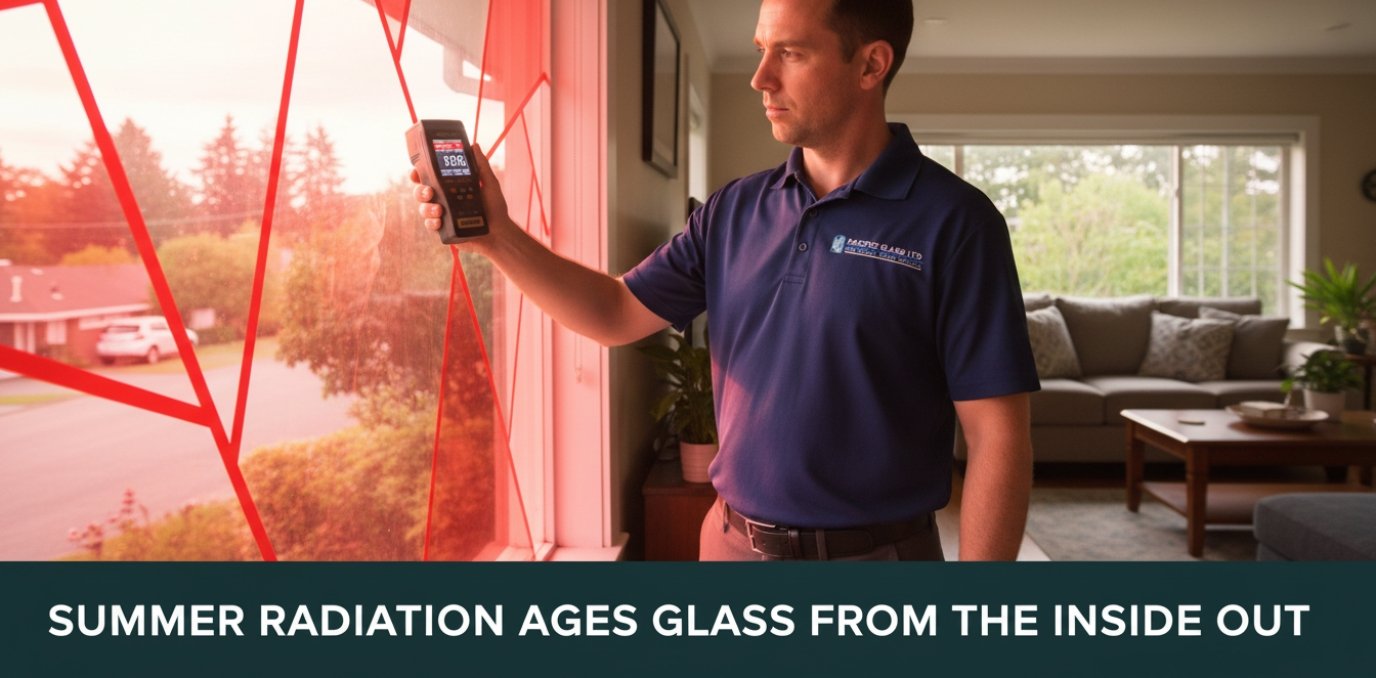
The sunlight sends UV radiation slicing through the glass.
Humidity rises, causing vapor pressure differences inside and outside the sealed unit.
What does this cause?
Memory fatigue.
The seals stretch wider than they should.
The insulating gas inside expands.
Any tiny imperfection becomes a trigger point for long-term failure.
Pacific Glass Ltd has replaced thousands of windows that “looked fine” but had spent years quietly storing summer damage—damage nobody saw, felt, or suspected.
Glass never forgets the heat that aged it.
It carries those memories forever.
Memory #4 — Fall: The Season of Slow Saturation
Fall is the season of moisture.
Rain begins.
Air thickens.
Evenings cool fast.
Mornings warm slowly.
This creates the perfect environment for one of glass’s deepest memories:
moisture pressure imbalance.
When outdoor humidity rises, but indoor temperatures stay warm, the pressure inside a double-pane unit becomes uneven. Seals stretch unevenly. A microscopic hairline flaw becomes a long-term vulnerability.
This is how fall leaves its fingerprints on your windows.
Not dramatically.
Not violently.
But through slow, soaking, sneaking saturation that pushes moisture to the boundary where seals must hold the line.
If a window fails in winter, fall planted the seed.
Glass Doesn’t Forget — It Stores Your Home’s History
Your glass remembers:
- The winter cold snaps that made it contract too far
- The summer bursts that stretched it wider than intended
- The spring surprises that made it jump between temperatures
- The fall humidity that pressed into its seals
Every season leaves a story behind.
Every year leaves a deeper one.
And when those stories pile up?
Your windows reach a threshold—a moment where the memories stored inside them become the reason they eventually weaken.
This weakening is not sudden.
It’s not dramatic.
It’s the quiet accumulation of seasonal stress.
This is the slow, subtle truth Pacific Glass Ltd explains to every homeowner:
Your windows are archivists.
They keep every memory until they can’t anymore.
What This Means for Your Home
When glass carries years of seasonal memory, several invisible effects begin:
1. Light Doesn’t Pass the Same Way
Your home feels “dimmer,” even if you can’t explain why.
2. Rooms Change Temperature Without Warning
Not because of weather—
but because glass isn’t reacting like it used to.
3. Seals Become More Sensitive
A small pressure shift that meant nothing five years ago suddenly becomes meaningful.
4. Glass Develops Hidden Stress Lines
Not cracks—
but internal tensions waiting for the right (or wrong) moment.
5. Energy Efficiency Quietly Drops
Your windows don’t need to fail to perform worse.
They just need to remember too much.
The Homeowner Illusion: “But My Windows Look Perfect.”
Of course they do.
Glass ages invisibly.
That’s the lie it tells best.
Windows don’t warn you with dramatic signs at first.
They age the same way people do—quietly, subtly, internally.
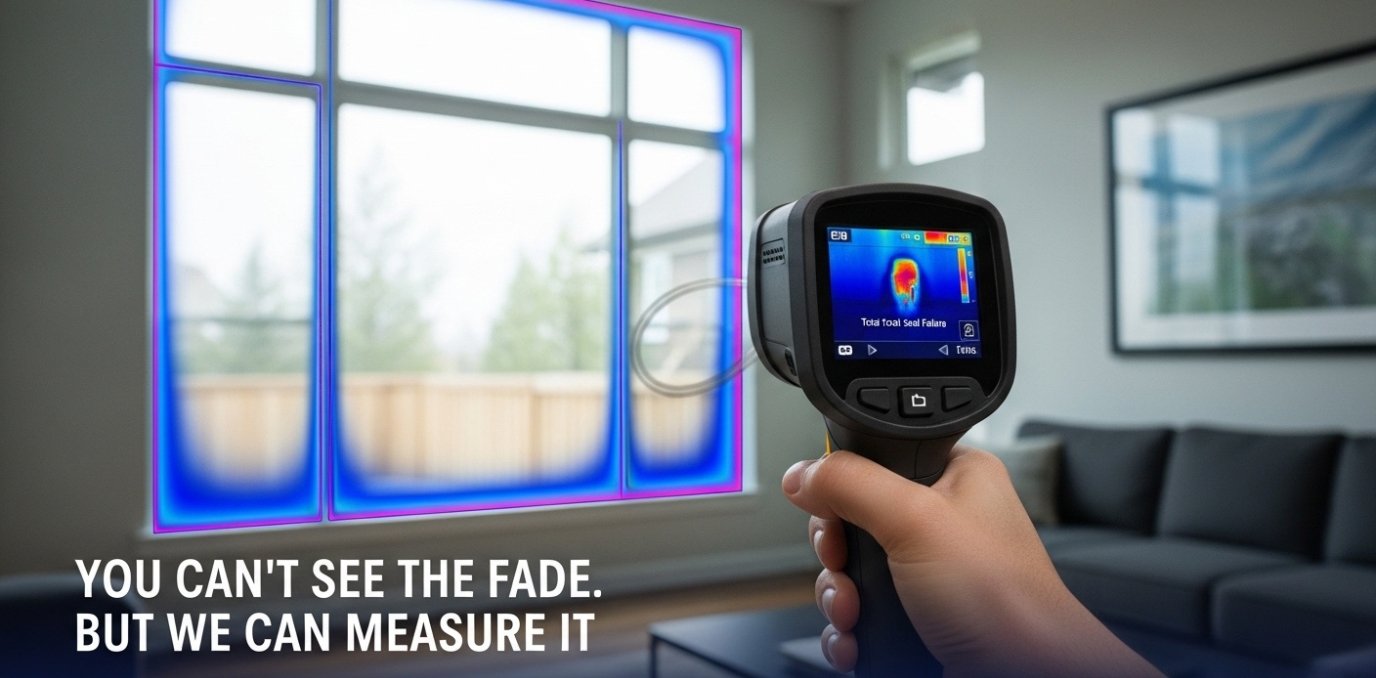
Pacific Glass Ltd sees the hidden signs instantly:
- light diffraction
- temperature bleed
- pressure shadows inside the pane
- seal fatigue patterns
- micro-condensation signatures
These are the signals that tell technicians:
“This window has a long memory… and it’s full.”
A Simple Table That Explains Everything
| Season | What Homeowners Notice | What Glass Actually Experiences |
| Winter | Cold rooms, drafts | Contraction, pressure spikes, edge stress |
| Spring | Sudden warm/cold swings | Thermal shock memory formation |
| Summer | Hot glass, glare | UV fatigue, gas expansion, seal stretching |
| Fall | Moist air, condensation | Moisture pressure imbalance, seal saturation |
Your windows feel more than you think.
They absorb more than you imagine.
And yes—
they remember more than you realize.
Why This Memory Matters
Glass memory is the origin point of:
- fogging
- seal failure
- thermal weakness
- frame distortion
- energy loss
- acoustic leak
- uneven comfort
Not all at once.
Not dramatically.
But gradually—season after season.
Invisible changes leading to visible problems.
How Pacific Glass Ltd Helps
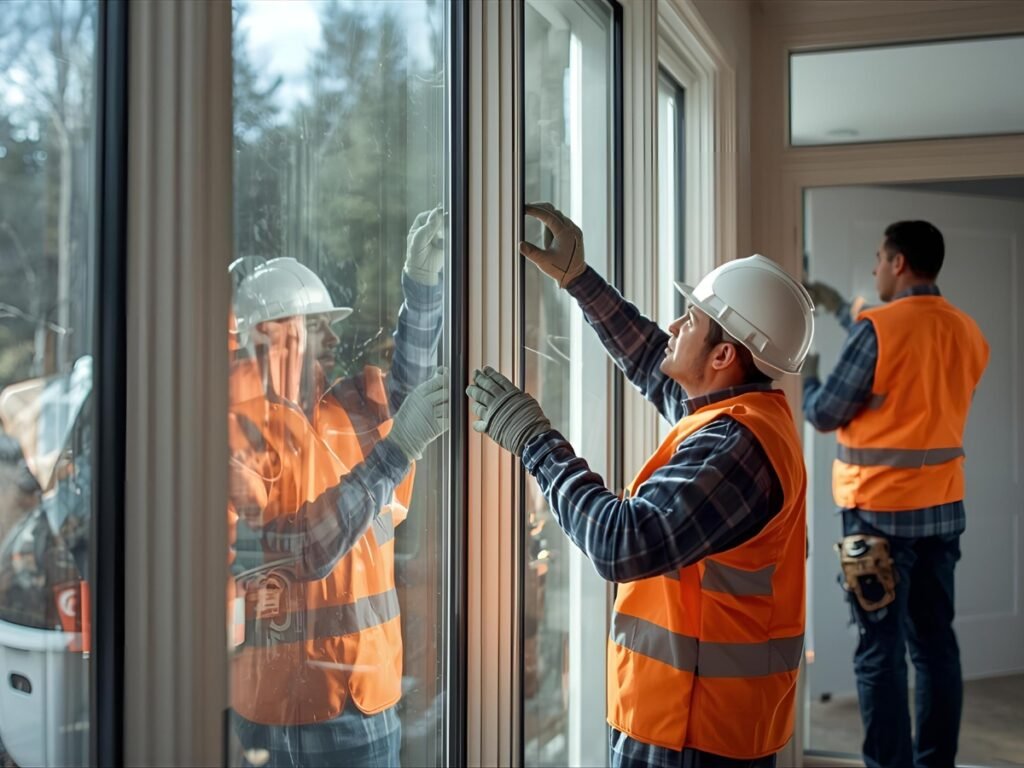
Pacific Glass Ltd doesn’t just replace windows.
They decode window memory—
the subtle patterns, stress histories, and season-built weaknesses that most people never see.
Their technicians read glass the way a mechanic reads an engine or a doctor reads symptoms.
They know:
- Which season caused which problem
- Whether your glass has reached its memory limit
- If your window is reacting the way healthy glass should
- Whether you’re months or years away from a visible failure
Their work is not just installation.
It’s interpretation.
Translation.
Restoration.
Because when glass remembers too much, Pacific Glass Ltd helps your home start fresh.
Final Thoughts
Your windows are not silent.
They’re not passive.
They’re not unfeeling.
They are season-keepers—
material storytellers recording every temperature swing, every humidity shift, every storm that has brushed against your home.
They remember everything you’ve lived through.And sooner or later,
those memories shape the comfort of your home in ways you can feel… even if you can’t explain.
FAQs
Yes. Glass and seals respond to temperature, pressure, and humidity. Over time, these stress cycles accumulate and weaken a window even if it looks fine.
Subtle drafts, uneven room temperatures, light distortion, or early condensation usually indicate hidden aging inside the glass or seals.
Burnaby’s mix of humidity, rain, coastal pressure changes, and temperature swings puts windows through more stress cycles than drier climates.
Minor issues can sometimes be addressed, but deep seasonal memory stress usually means the sealed glass unit should be replaced for long-term performance.
Pacific Glass Ltd identifies hidden stress patterns, evaluates thermal performance, checks seal integrity, and recommends the best solution to restore comfort and efficiency.

JAP Jabar is the highly skilled and experienced owner of Pacific Glass Ltd, a trusted leader in glass services throughout British Columbia, Canada. With over 15 years of experience in glass repair, installation, and design, JAP has built a strong reputation for excellence in providing top-tier glass solutions, including glass doors, windows, railings, balconies, and more. Whether it’s residential or commercial, JAP is committed to delivering quality and precision in every project. Pacific Glass Ltd offers a wide range of services, from sliding doors and swing doors to storefront glass, patio glass doors, mirror services, and shower glass installations, ensuring customers receive the best in durability, aesthetics, and functionality.
Pacific Glass Ltd serves clients across Burnaby, Vancouver, and greater British Columbia with a focus on offering high-end glass solutions that meet the unique needs of each space. JAP’s expertise spans multiple types of glass services, including glass & sealed unit replacement, windows repair, commercial doors, fixed walls, glass canopies, and more. As a locally owned and operated business, JAP’s commitment to excellence shines through in every project, earning him a reputation as one of the leading glass specialists in the area.