Most people think windows are static objects—motionless, silent, unchanging.
But ask any glass technician, building scientist, or homeowner who has woken up to mysterious morning fog, overnight drafts, or a strangely cold room, and they’ll tell you:
Your glass is the most active part of your home at night.
It shifts.
It breathes.
It compresses.
It expands.
It stores heat.
It releases cold.
It interacts with outdoor moisture.
It pushes against seals.
It responds to micro-climate changes inside your home.
And the most important part?
The seal inside your double-pane glass is working harder at 3 AM than at any other time of day.
In this blog, we’ll uncover a story few homeowners have ever heard—the silent nighttime journey of your window seals.
And how Pacific Glass Ltd helps prevent the failures that start long before you wake up.
This is the Seal Story…
a science-meets-mystery tale happening right inside your Burnaby windows.
The Night Shift: Why Window Seals Work Harder in the Dark
During the day, sunlight warms your windows.
Even if it’s cloudy, your glass receives a steady amount of radiant heat.
But at night?
Everything reverses.
- Outdoor temperatures drop
- Humidity rises
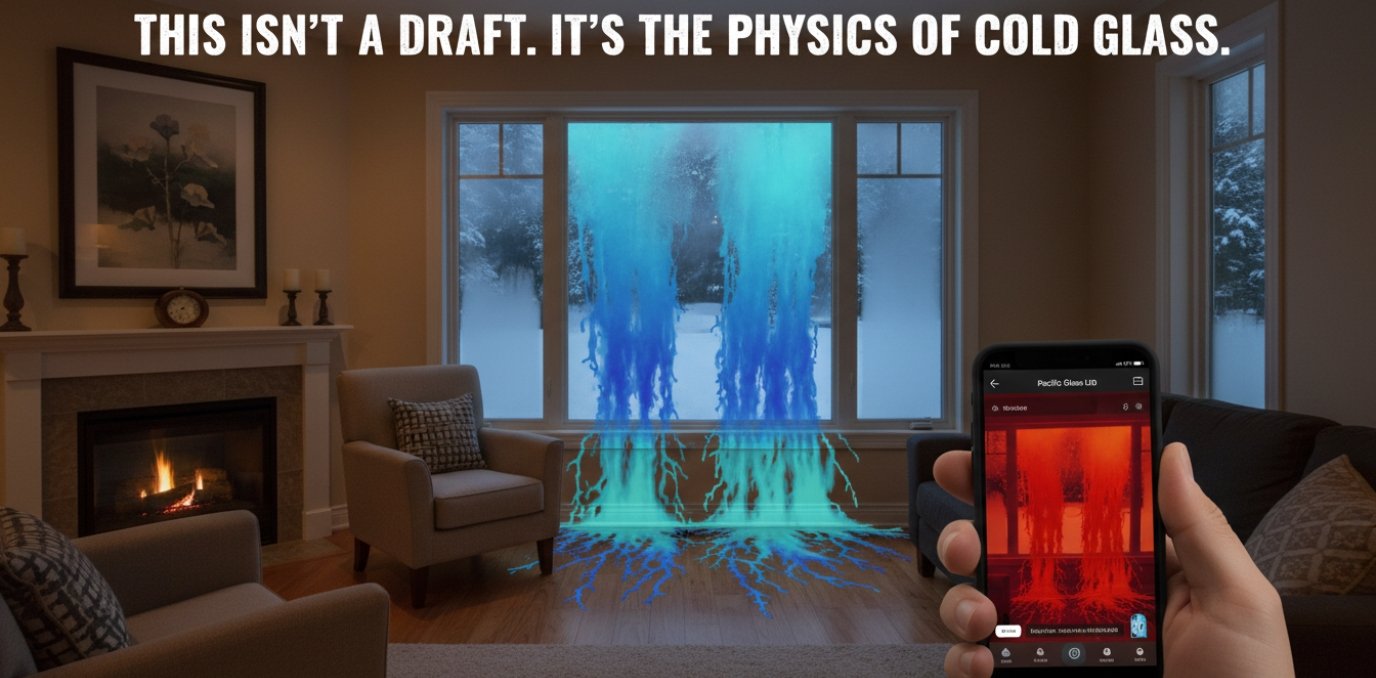
- Glass cools faster than walls
- Seals contract
- Pressure inside the IGU changes
- Indoor-generated heat creates uneven thermal layers
Your windows experience more expansion-and-contraction cycles at night than during the day.
And this cycle matters because:
**Every contraction pulls on the seals.
Every cooling moment tightens the internal pressure.
Every temperature drop stresses the insulated glass unit (IGU).**
This is why many windows fail quietly—not during storms or heat waves,
but during calm, cold nights.
What Actually Happens Inside the Glass While You Sleep?
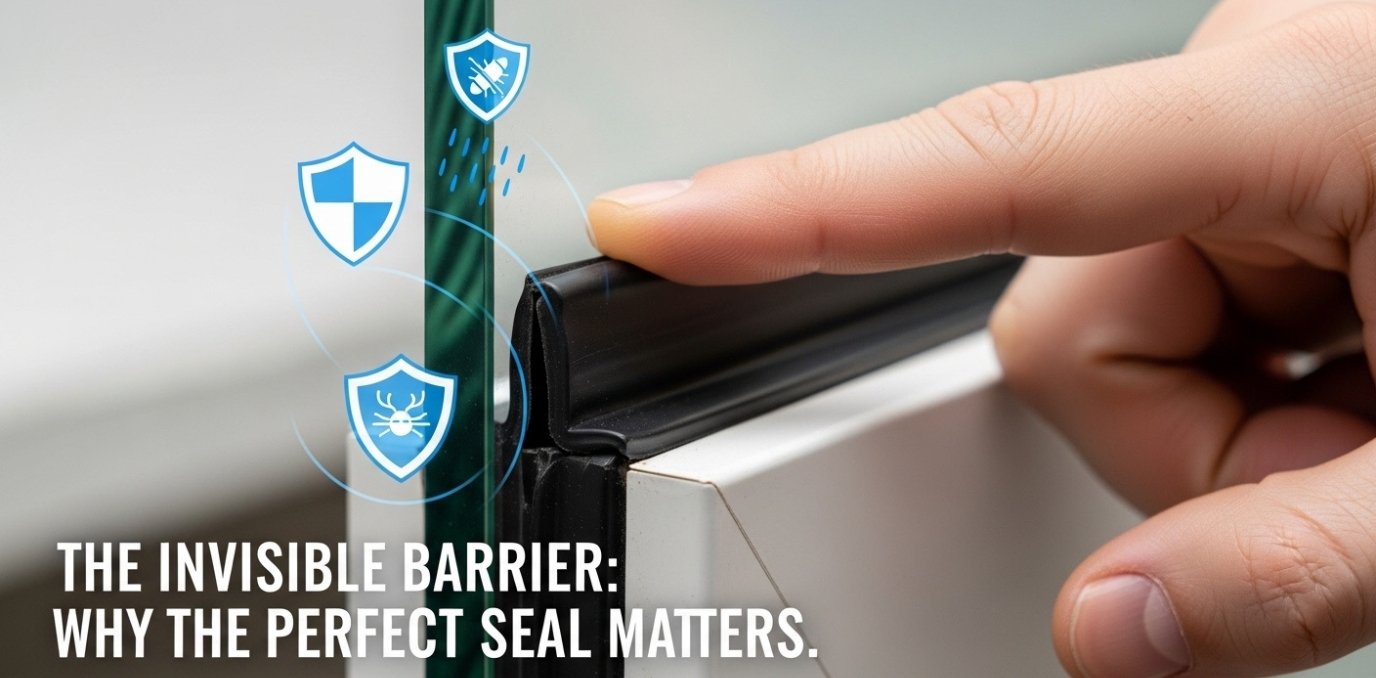
Your double-pane window is a sealed system made of:
- Two pieces of glass
- A spacer (usually aluminum or foam)
- A gas layer (argon, krypton, or dry air)
- A sealant that keeps the entire system airtight
Inside that sealed space, temperature changes lead to a series of micro-reactions.
Here’s what happens from midnight to sunrise:
12 AM — The Cooling Begins
The outer glass cools faster than the inside glass.
This creates a temperature imbalance between the two panes.
The seal begins its first contraction of the night.
2 AM — Internal Pressure Drops
As the gas cools, its pressure decreases.
The two panes begin to slightly “pull inward,” placing tension on the perimeter seal.
Even a healthy seal feels this shift.
3:30 AM — Dew Point Reaches Critical Levels
This is the hour when:
- Outdoor temperatures hit their lowest
- Indoor humidity reaches its highest
- Glass reaches the dew point fastest
If the seal is even slightly weakened, moisture will creep in.
This is why many homeowners see morning condensation between the panes.
4 AM — Micro-Movements Intensify
Your home cools further.
Your HVAC slows.
Your insulation stabilizes.
Your glass continues to contract.
These micro-movements are tiny—fractions of a millimeter—but over years, they stretch the seal like a muscle slowly wearing out.
6 AM — Pressure Rises with Sunrise
As the sun comes up:
- Outdoor temperatures rise
- The outer pane warms
- The inner pane lags behind
- The seal expands again
This expansion cycle now pushes outward.
In one night, your seal has experienced:
- Cooling
- Pressure drop
- Contraction
- Thermal imbalance
- Expansion
- Moisture stress
And you slept through it all.
Why Burnaby Homes Experience Stronger Nighttime Seal Stress
Burnaby’s microclimate makes nighttime seal stress much worse.
Here’s why:
✔ Moist ocean air travels inland at night
More humidity = more condensation risk.
✔ Rapid evening temperature drops
Especially near forested and shaded neighborhoods.
✔ High rainfall frequency saturates window frames
Wet frames transfer cold faster into seals.
✔ Frequent seasonal shifts cause more thermal cycling
Real window damage comes from repetition, not extremes.
✔ Multi-unit buildings trap heat differently
Leading to internal humidity spikes at night.
All of this means:
Burnaby window seals work harder than the Canadian average.
And fail faster—often silently.
The Symptoms You See in the Morning
If your seals struggled overnight, you’ll notice these morning clues:
1️⃣ Fog between the panes
Internal condensation = seal breach.
2️⃣ Cold pockets in the room
Outer pane cooled too fast; inner pane lagging.
3️⃣ Glass that feels “wet” or “clammy”
Moisture is building on the colder inner surfaces.
4️⃣ Heat feels trapped
Waking up to stuffy air = internal pressure imbalance.
5️⃣ “Shadow stains” on the glass edges
This is moisture creeping under failing sealant.
6️⃣ Strange drafts in the early morning
Not from walls—
from thermal contraction around the frame.
These clues start small but grow over time.
The Science Behind Seal Failure (Explained Simply)

Your seal ages because of:
- Thermal expansion cycles
- UV degradation
- Frame movement
- Gas pressure shifts
- Moisture absorption
- Material fatigue
- Sun → shade → cold cycles
Think of your seal as a rubber band.
Stretch it once—nothing happens.
Stretch it daily for years—it eventually weakens.
Stretch it at night–cold–then day–heat–again and again—it will crack.
Or worse:
It allows moisture to enter without anyone noticing.
This silent stage can last months or years before fog becomes visible.
That’s why daytime inspections often miss early failure signs.
Nighttime tells the real story.
How Pacific Glass Ltd Protects Your Windows While You Sleep
Most homeowners don’t realize:
The health of their window seals today determines their comfort tomorrow.
This is where Pacific Glass Ltd steps in with expertise built specifically around:
✔ Burnaby’s climate
✔ Pacific Northwest moisture patterns
✔ Nighttime humidity cycles
✔ Temperature lag inside double-pane glass
✔ Seal fatigue caused by overnight cooling
Our services prevent nighttime seal stress from destroying your windows:
⭐ Window Seal Repairs
Stop moisture before fogging begins.
⭐ Insulated Glass Unit (IGU) Replacement
Restore thermal stability overnight.
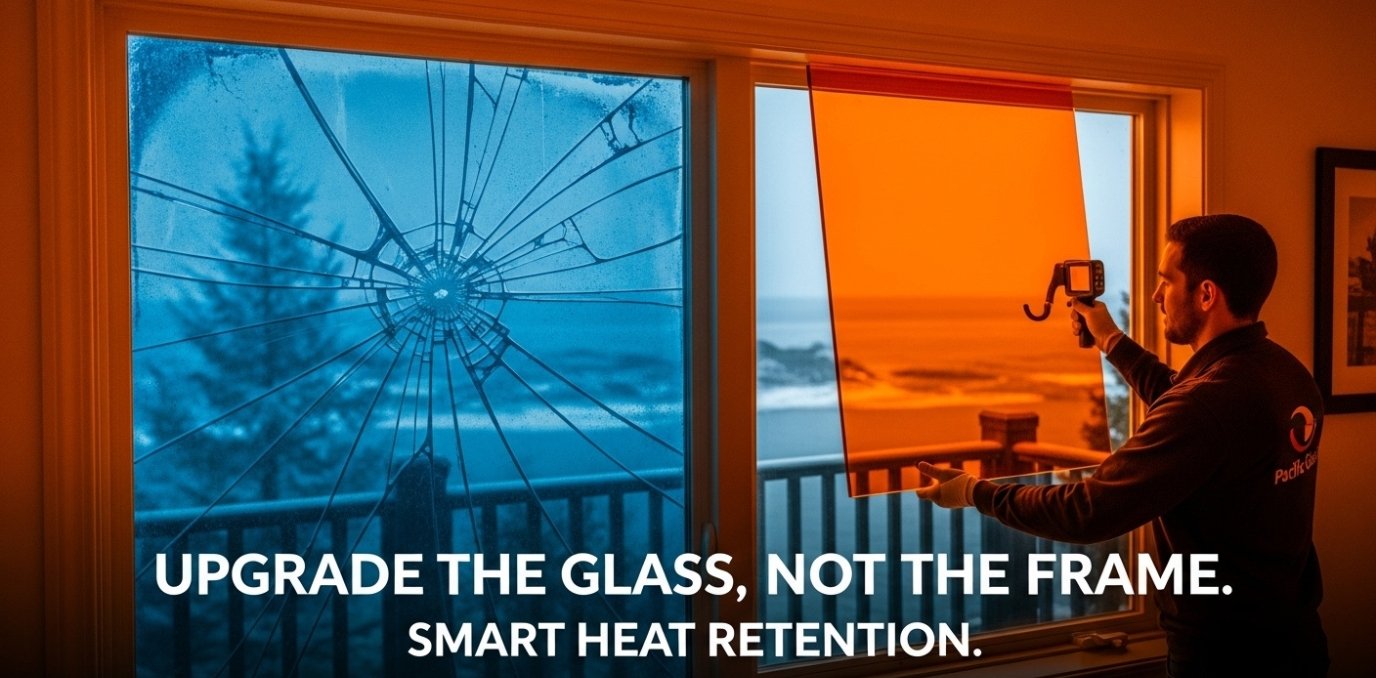
⭐ Upgraded Low-E and Argon Glass
Reduce internal pressure swings while you sleep.
⭐ Frame moisture corrections
Keep nighttime cold from over-stressing seals.
⭐ Diagnostic testing
We detect seal damage invisible to homeowners.
⭐ Triple-Pane Upgrades
Minimize thermal contraction during night hours.
With these solutions, your windows no longer fight the night—they adapt to it.
What Your Home Feels Like After Nighttime Seal Stress Is Gone
Homeowners describe waking up to:
✨ Warmer mornings
✨ No more fog on glass
✨ Even room temperatures
✨ No more overnight drafts
✨ Better air quality
✨ Lower humidity spikes
✨ Lower heating bills
✨ Windows that “feel alive again”
This is because healthy seals:
- Hold temperature consistently
- Avoid nighttime thermal dips
- Reduce condensation formation
- Keep indoor climate stable
You sleep better because your home stays balanced.
SUMMARY TABLE — Nighttime Seal Behavior vs. Healthy Glass
| Time | Weak or Aging Seal | Healthy Seal |
| Midnight | Rapid cooling causes tension | Stabilized temperature transition |
| 2 AM | Pressure drop inside IGU | Balanced internal pressure |
| 3:30 AM | Moisture enters micro-gaps | Moisture fully blocked |
| 4 AM | Increased contraction stress | Flexible, uniform contraction |
| Sunrise | Rapid expansion strain | Smooth recovery from night cooling |
| Morning | Fog, chill, drafts | Clear glass and stable comfort |
Final Thoughts
Whether you notice it or not, your window seals are telling a story:
A story of temperature.
A story of pressure.
A story of expansion and contraction.
A story written in silence.
A story unfolding while you sleep.
And when seals fail, the story becomes visible—fog, drafts, cold rooms, and rising energy bills.
But with the right care—and the right experts—your windows can protect you through every night cycle.
That’s why Burnaby homeowners trust Pacific Glass Ltd:
**We know the Seal Story.
We understand the night.
And we keep your windows strong—while you sleep.**
FAQs
Because nighttime cooling causes contraction and pressure changes that stress aging seals.
No — it’s a sign your seal is compromised.
Yes — we offer IGU replacements and seal repairs that save homeowners money.
Typically 10–20 years, but Burnaby’s climate can shorten that lifespan.
Morning discomfort: cold rooms, drafts, or overnight moisture on/in the glass.

JAP Jabar is the highly skilled and experienced owner of Pacific Glass Ltd, a trusted leader in glass services throughout British Columbia, Canada. With over 15 years of experience in glass repair, installation, and design, JAP has built a strong reputation for excellence in providing top-tier glass solutions, including glass doors, windows, railings, balconies, and more. Whether it’s residential or commercial, JAP is committed to delivering quality and precision in every project. Pacific Glass Ltd offers a wide range of services, from sliding doors and swing doors to storefront glass, patio glass doors, mirror services, and shower glass installations, ensuring customers receive the best in durability, aesthetics, and functionality.
Pacific Glass Ltd serves clients across Burnaby, Vancouver, and greater British Columbia with a focus on offering high-end glass solutions that meet the unique needs of each space. JAP’s expertise spans multiple types of glass services, including glass & sealed unit replacement, windows repair, commercial doors, fixed walls, glass canopies, and more. As a locally owned and operated business, JAP’s commitment to excellence shines through in every project, earning him a reputation as one of the leading glass specialists in the area.