Most homeowners imagine window failure as a single moment.
A crack.
A fogged pane.
A sudden draft that makes the problem obvious.
But in reality, windows almost never fail like that.
Window failure is quiet. Gradual. Invisible for years. And by the time something looks “wrong,” the real damage has often been happening for a long time already.
At Pacific Glass Ltd, this is one of the most common misunderstandings we see. Homeowners assume windows are either working or broken. In truth, windows exist on a long performance timeline—and most of that timeline is hidden from view.
This blog explores why window failure rarely happens all at once, how performance quietly declines in stages, and why waiting for visible signs often means paying a much higher cost later.
Windows Are Systems, Not Objects
It’s easy to think of a window as a solid object: glass in a frame, sealed tight, doing its job.
But modern windows are systems.
They rely on:
- multiple layers of glass
- sealed air or gas spaces
- flexible edge seals
- frames that expand and contract
- coatings that manage heat and light
Each part ages differently. Each responds differently to temperature, sunlight, wind, and moisture.
Because of this, window failure doesn’t arrive like a switch flipping off. It arrives more like a slow dimming of performance.
The First Stage: Performance Shifts You Can’t See
The earliest stage of window failure is invisible.
No fog.
No cracks.
No obvious drafts.
Instead, what changes first is performance.
Tiny amounts of insulating gas begin to escape from between panes. Seals lose elasticity. Microscopic gaps form that are far too small to see but large enough to affect comfort.
At this stage, most homeowners feel something but can’t explain it:
- rooms don’t hold warmth as long
- outside noise feels closer
- heating systems cycle more often
- certain areas feel slightly cooler
Nothing looks broken, so nothing gets addressed.
This stage can last years.
Why Your Windows Don’t Warn You
Windows don’t come with alarms. They don’t beep when efficiency drops by 10%. They don’t alert you when seals weaken.
And because glass often stays visually clear, homeowners assume everything is fine.
This is one of the biggest misconceptions: clear glass does not mean healthy windows.
At Pacific Glass Ltd, we regularly inspect windows that look perfect but are quietly underperforming. Comfort loss, energy loss, and sound loss often begin long before any visual signal appears.
The Middle Years: Compounding Loss
As windows continue to age, small performance losses begin to stack.
Insulation weakens further. Temperature differences across the glass increase. Frames experience more stress as seasons change.
This is the phase where homeowners often adapt without realizing it:
- turning the heat up slightly higher
- avoiding sitting near windows
- using heavier curtains year-round
- blaming comfort issues on the house itself
Because the decline is gradual, it feels normal. But comfort is being taxed a little more each year.
This is also when energy bills quietly rise—not dramatically, but consistently.
Why Failure Is Rarely Sudden
If windows failed all at once, replacement decisions would be easy.
But they don’t.
Failure is cumulative. Every small loss increases the strain on what remains. By the time fogging appears or drafts become obvious, the window system has often been compromised for a long time.
Think of it like tires wearing down. They don’t fail the moment tread starts disappearing. But once grip is gone, the problem feels sudden—even though it wasn’t.
Sound Is Often the First Casualty
One of the earliest signs of window decline isn’t temperature—it’s sound.
Homeowners often tell Pacific Glass Ltd:
“It just feels noisier than it used to.”
That’s because sound insulation depends heavily on airtight seals and consistent spacing between panes. As seals weaken, sound travels more easily, even when glass remains clear.
This change is subtle, but once noticed, it’s hard to ignore.
Why Waiting for Fog Is Waiting Too Long
Fogging between panes is often treated as the moment windows “fail.”
In reality, fogging is a late-stage symptom.
By the time moisture becomes visible:
- insulating gas is already gone
- thermal performance has dropped significantly
- sound control has weakened
- energy efficiency is compromised
Fog doesn’t mark the beginning of failure. It marks the point where the system can no longer hide it.
The Cost of Doing Nothing
Because window failure is gradual, doing nothing feels harmless.
But every year of inaction compounds:
- higher heating and cooling costs
- reduced comfort
- increased wear on HVAC systems
- declining indoor air stability
This is what many homeowners don’t realize: windows collect a comfort tax annually. It’s small enough to ignore at first—but expensive over time.
Why Some Rooms Feel Worse Than Others
Not all windows age at the same pace.
Exposure matters.
Windows facing stronger sunlight, prevailing winds, or temperature extremes experience more stress. Even within the same home, one side may age faster than another.
This uneven decline often confuses homeowners:
“Why is this room always colder?”
“Why is this side noisier?”
The answer isn’t sudden failure—it’s uneven aging.
Frames Can Survive Long After Glass Declines
Another myth is that window replacement must always mean full replacement.
In many cases, frames remain structurally sound while the glass units inside them have aged out of optimal performance.
This is where professional assessment matters.
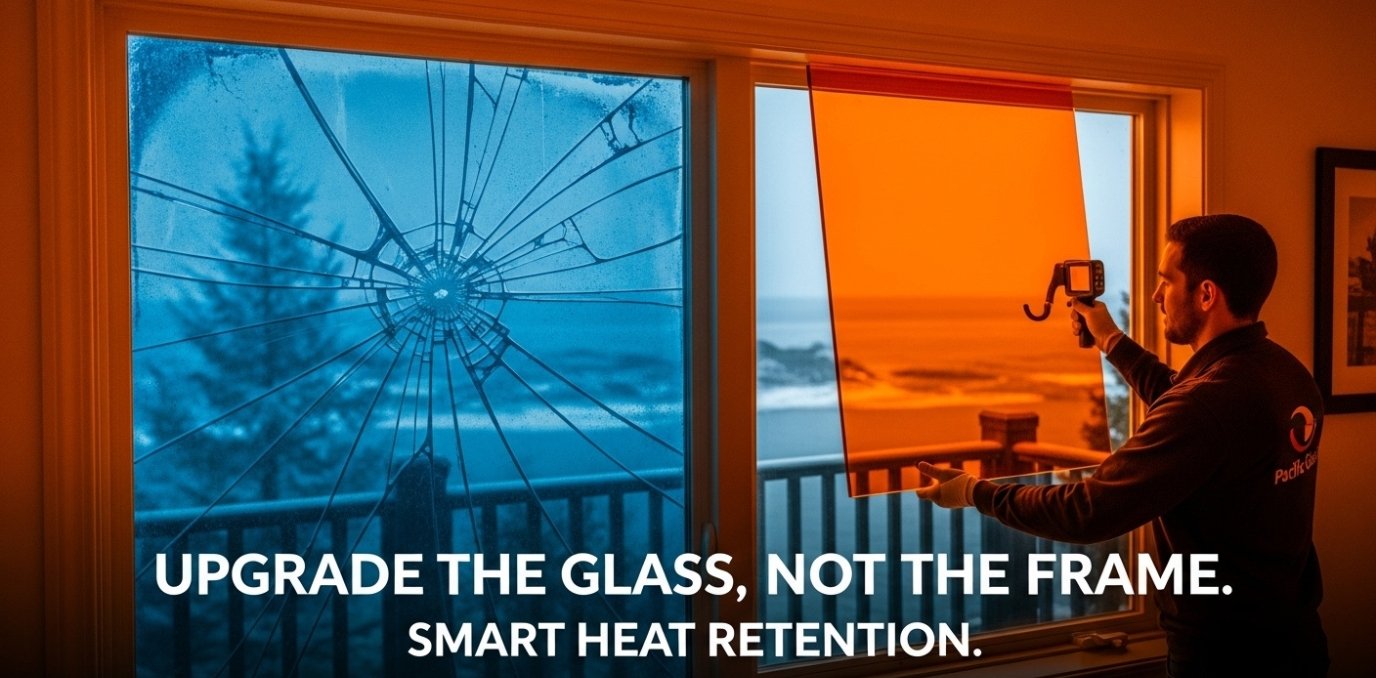
At Pacific Glass Ltd, we often help homeowners restore comfort by replacing insulated glass units while keeping existing frames—saving cost while restoring performance.
Why Homeowners Misjudge Window Lifespan
Many people believe windows last 20–30 years without issue.
Structurally, they might.
Performance-wise, that’s a different story.
Environmental exposure, manufacturing quality, installation precision, and maintenance all affect how long windows perform well—not just how long they physically exist.
The biggest mistake homeowners make is measuring window health by appearance alone.
The Psychology of Gradual Decline
Humans are remarkably good at adapting to slow change.
If your home loses 2% comfort each year, you won’t notice it. After ten years, you’ll feel the difference—but you won’t remember when it started.
That’s why window failure feels sudden even when it isn’t.
What Proactive Homeowners Do Differently
Homeowners who avoid expensive surprises tend to:
- evaluate windows based on performance, not appearance
- address issues early instead of waiting for fog or drafts
- replace glass strategically instead of reactively
- consult specialists instead of assuming
This proactive approach often costs less over time and preserves comfort instead of chasing it.
How Pacific Glass Ltd Approaches Window Aging
At Pacific Glass Ltd, we don’t treat windows as broken or fine.
We treat them as systems on a timeline.
Our role is to:
- identify where performance is declining
- explain what’s happening inside the glass
- recommend solutions based on function, not fear
- help homeowners act before failure becomes expensive
That means fewer surprises, better comfort, and smarter decisions.
A Better Way to Think About Windows
Instead of asking, “Are my windows broken?”
Ask, “Are my windows still performing the way my home needs them to?”
Because window failure isn’t an event.
It’s a process.
And understanding that process is the difference between reacting late and living comfortably year after year.
Final Thoughts
Windows don’t fail loudly.
They fade quietly.
And the homeowners who understand that timeline are the ones who stay ahead of discomfort, rising costs, and unnecessary replacements.
If your home feels different than it used to—and nothing looks wrong—that may be the most important sign of all.
Pacific Glass Ltd helps homeowners see what glass hides—and act before failure finally makes itself visible.
FAQs
Because seals, insulation, and performance decline gradually over many years before visible signs appear.
Yes. Gas loss and seal weakening often happen long before condensation is visible
Subtle comfort changes such as temperature imbalance or increased outside noise
Absolutely. Clear glass does not guarantee good insulation or sound control.
In many cases, yes. Pacific Glass Ltd often restores performance by replacing only the glass units.

JAP Jabar is the highly skilled and experienced owner of Pacific Glass Ltd, a trusted leader in glass services throughout British Columbia, Canada. With over 15 years of experience in glass repair, installation, and design, JAP has built a strong reputation for excellence in providing top-tier glass solutions, including glass doors, windows, railings, balconies, and more. Whether it’s residential or commercial, JAP is committed to delivering quality and precision in every project. Pacific Glass Ltd offers a wide range of services, from sliding doors and swing doors to storefront glass, patio glass doors, mirror services, and shower glass installations, ensuring customers receive the best in durability, aesthetics, and functionality.
Pacific Glass Ltd serves clients across Burnaby, Vancouver, and greater British Columbia with a focus on offering high-end glass solutions that meet the unique needs of each space. JAP’s expertise spans multiple types of glass services, including glass & sealed unit replacement, windows repair, commercial doors, fixed walls, glass canopies, and more. As a locally owned and operated business, JAP’s commitment to excellence shines through in every project, earning him a reputation as one of the leading glass specialists in the area.